Tattoos almost beg to be interpreted. The same design can mean ten different things to ten different people. Some get tattoos to mark something big — a loss, a win, a turning point. Others just like how it looks.
Wave Tattoo Meaning sits right in that middle. They can be tiny or huge, subtle or bold, deeply personal or just pretty. Both are totally fine.
Waves have been part of tattoo art for ages — sometimes for symbolism, sometimes just for the aesthetic. If you’re thinking about getting one, or already have one, here’s a grounded look at what wave tattoos mean and why they carry so much significance.
And when you’re ready for the needle, HUSH will help you survive the session.
The History Of Symbolism In Tattoo Art
These days, tattoos don’t have to be deep. That’s one of the best parts about modern tattoo culture. You don’t need a tragic backstory or a perfectly articulated meaning. You can get a tattoo because it makes you smile or because it looks cool or because you’ve loved the same album for 15 years.
But that hasn’t always been the case.
Historically, getting tattooed was not casual. It wasn’t something you did on a whim between errands. Tattoo artists weren’t easy to find, equipment wasn’t standardized, and the process itself carried real risk. So if you were going to go through all of that, it usually meant something.
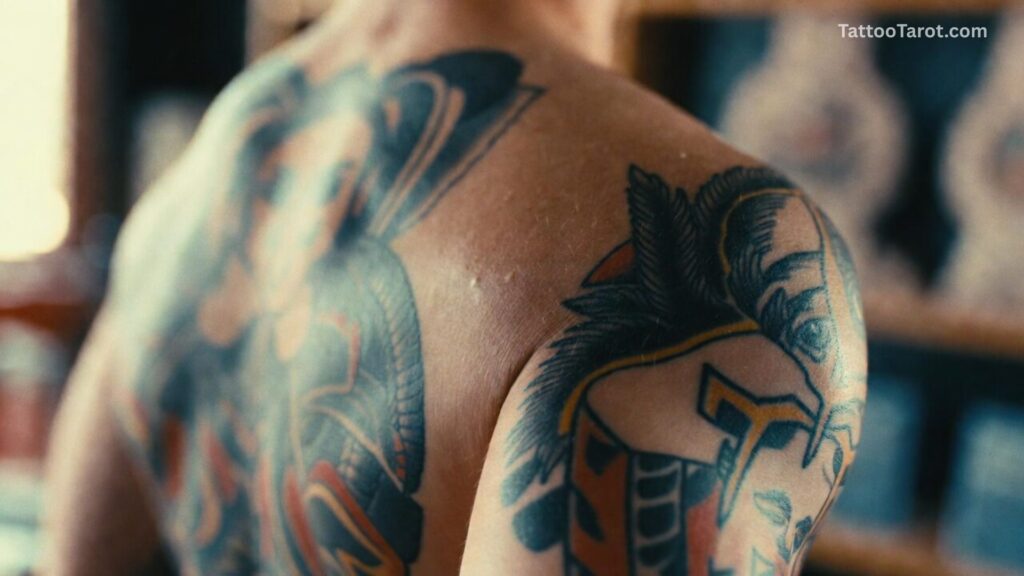
In a lot of cultures, tattoos marked big moments — becoming an adult, surviving a trial, belonging to a group, earning respect. Tattoos weren’t decoration first. They were symbols first. Visual language etched into skin.
Even though tattoos are more accessible now, that history hasn’t disappeared. A lot of people still feel drawn to designs that carry meaning, even if they can’t fully explain why. That’s where symbols like waves come in. They’ve stuck around because they still say something without needing words.
What Is a Wave Tattoo?
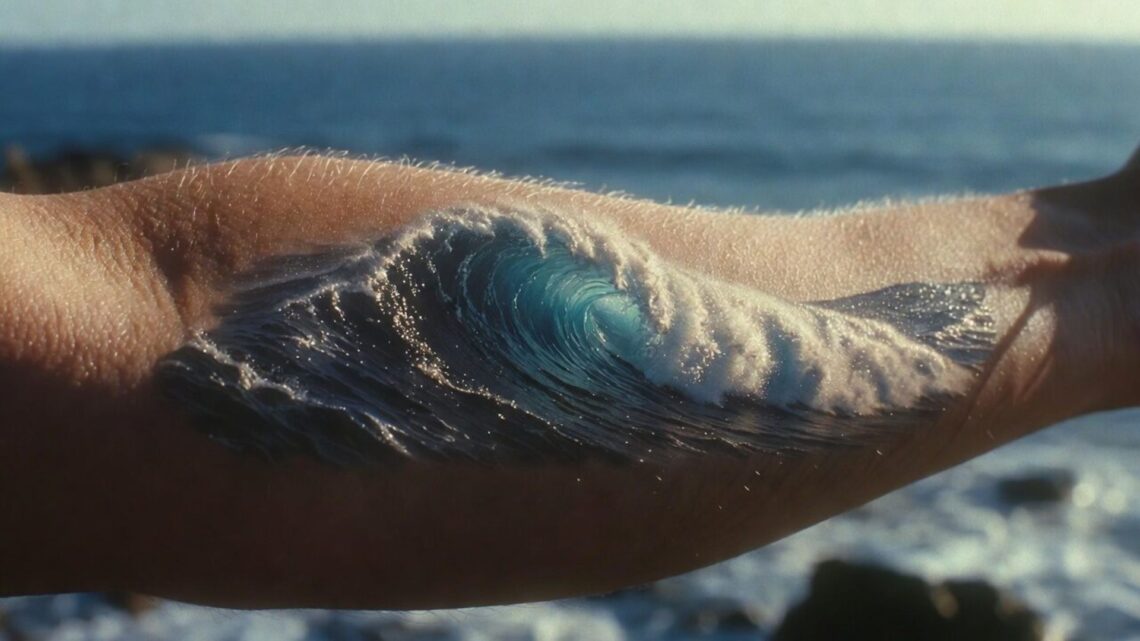
At face value, a wave tattoo is just that — a wave. Ocean water. Movement. Curves.
Some wave tattoos are obvious. You see them and immediately think surfing, saltwater, sunburns, long days by the sea. Others are stripped way down. A single line. A repeating curve. Something so minimal you almost miss it if you’re not looking closely.
Even when they look totally different, most wave tattoos are tapping into the same general feeling. Motion. Change. Something that doesn’t stay still no matter how much you want it to.
The Origin of Waves in Traditional Japanese Tattoo Art
If you look at traditional Japanese tattooing, waves are everywhere. Sometimes they’re front and center. Sometimes they’re tucked into the background, doing quiet work.
Japan is surrounded by water. The ocean feeds people, isolates people, protects people, and kills people. It’s never just scenery. So it makes sense that waves show up again and again in Japanese art and mythology.
In traditional Japanese tattoos, waves are often used to set the scene. A koi fish fighting its way upstream through heavy waves isn’t just a fish — it’s persistence, struggle, refusing to quit. A warrior surrounded by crashing water isn’t just standing near the ocean — he’s moving through chaos, uncertainty, forces he can’t control.
Japanese waves don’t look like Western waves. They’re not foamy or broken or delicate. They’re big, heavy, curling shapes. They look powerful, almost intentional. More force than splash. Water and wind get treated similarly in this style — invisible forces that still shape everything around them.

Also Read: Sacred Geometry Tattoo Meanings
Different Approaches to Wave Tattoo Symbolism
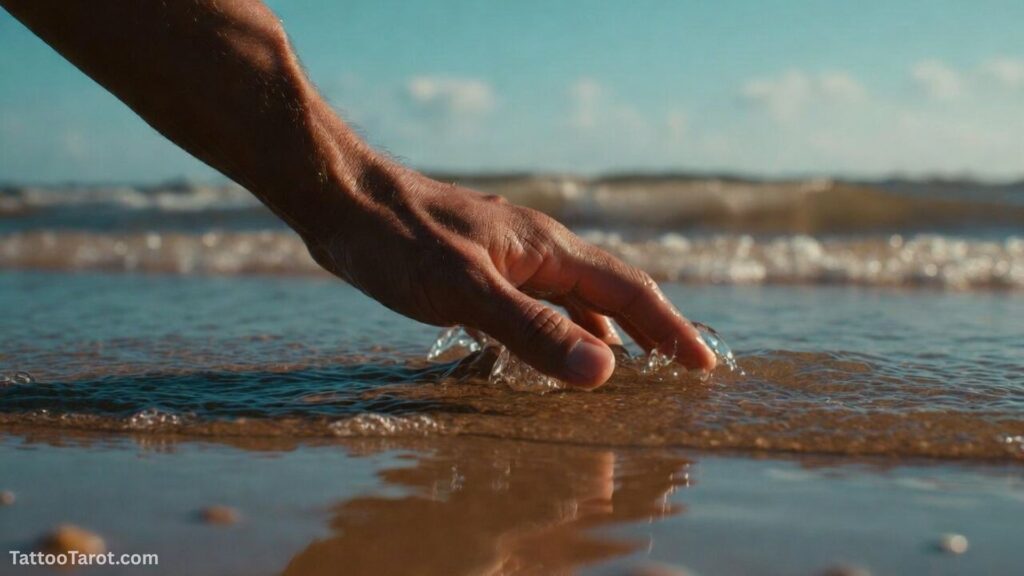
This is where things get personal. Waves don’t have one meaning. They’re more like a framework people hang their own experiences on.
A Love Of Nature
For some people, it really is that simple. The ocean feels grounding. Being near it quiets their brain. Waves remind them that the world is bigger than whatever’s stressing them out right now.
Waves destroy things, sure. They erase footprints and knock stuff over. But they also carry life across the planet. They shape coastlines. They make ecosystems possible. That mix of destruction and creation is what makes them feel real.
The Changing Phases Of Life
People say “it comes in waves” because it’s true. Grief doesn’t move in a straight line. Neither does healing. Some days feel manageable. Some days hit you out of nowhere.
A wave tattoo can be a way of acknowledging that. Not romanticizing it. Just saying, “Yeah, this is how it goes. Up, down, repeat.” Sometimes it means you’re still in it. Sometimes it means you made it through and want a reminder that you can survive the next one too.
Transformation
The ocean can be flat and quiet for days. Then suddenly it’s not.
If you’ve gone through a big change — the kind that rewired how you see yourself — waves can represent that shift. The moment where things stopped being calm and started being real. Where you stopped being passive and started moving.
It’s not always about chaos. Sometimes it’s about strength. Becoming something more formidable than you were before.
A Cultural Or Spiritual Reverence For The Sea
In a lot of island cultures, the ocean isn’t neutral. It’s alive. It has agency. It’s something to respect, not conquer.
Polynesian and Maori traditions often view waves as spiritual forces — protectors, guides, messengers. For people connected to those cultures, wave tattoos can be deeply spiritual. Not trendy. Not decorative. Protective.
A Symbol of a Lifelong Commitment
For sailors, fishermen, and Navy service members, waves aren’t abstract. They’re routine. They’re work. They’re danger and comfort at the same time.
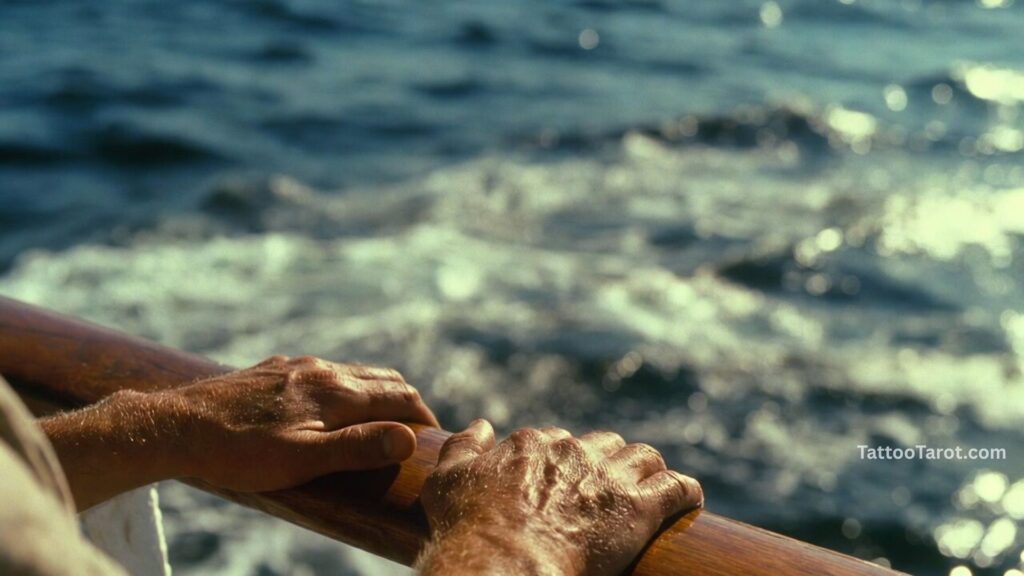
Wave tattoos in these spaces often mark years spent at sea. Places traveled. Time given. The ocean becomes part of who you are whether you want it to or not.
The Sheer Love of Art
And sometimes — honestly — it’s just art.
You don’t need a poetic explanation. If waves make you happy and the beach feels like home, that’s enough. Tattoos don’t need to earn their place on your body. If you love it, that’s the meaning.
Incorporating Waves Into a Larger Tattoo
Waves are great connective tissue. They fill space naturally. They keep designs from feeling stiff.
They work with sea life, mythology, gods, mermaids, ships, landscapes. Sometimes they carry symbolism. Sometimes they’re just there because they make everything else flow better.
Wave Tattoo Styles
There’s no rulebook here.
- Minimalist waves are quiet and subtle. Easy to hide. Easy to live with.
- Tribal waves carry cultural weight and should be approached with respect.
- Photorealistic waves are a big commitment — time, money, skin space.
- Stylized waves fit into almost any art style if you’ve got the right artist.
Other Types Of Waves In Tattoos
Not all waves come from the ocean.
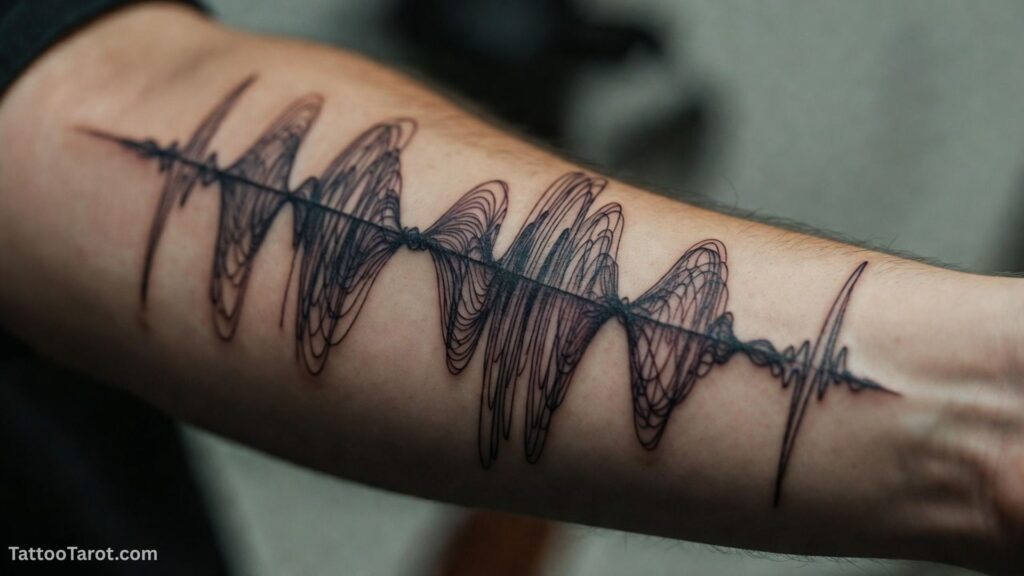
Sound waves, sine waves, electromagnetic waves, seismic waves — same idea, different language. Energy moving through space. Musicians love sound waves. Scientists lean toward math-based waves. Same metaphor, different life experience.
Take Your Time With Your Design
Waves are harder to tattoo well than people think. Movement matters. Flow matters. Depth matters.
Not every artist is great at them, and that’s okay. Look at portfolios. Ask around. Talk to people whose tattoos you actually like. Have a consultation and listen to feedback — but don’t let anyone bulldoze your idea either.
The right artist will feel like a collaborator, not a replacement.
Is A Tattoo Gonna Hurt?
Yeah. It probably will.
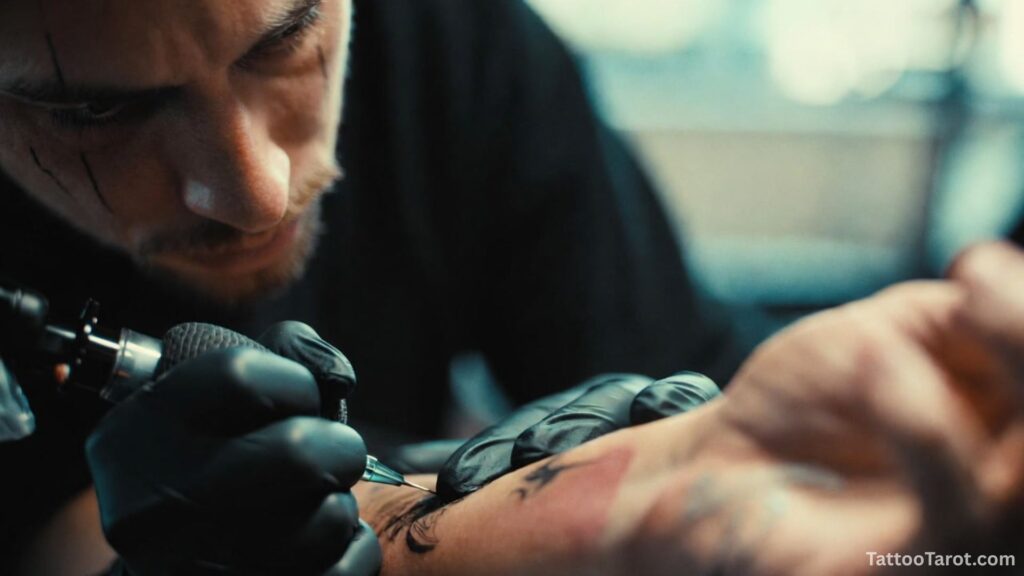
But pain doesn’t have to decide your design for you. If you want a detailed wave and pain is the only thing stopping you, HUSH tattoo numbing cream can take the edge off enough to make long sessions manageable. Apply it before your appointment, wrap it up, and let it do its thing.
Get the tattoo you actually want. Don’t settle because you’re nervous. HUSH can help with the pain, the healing, and whatever tattoo comes next — because let’s be real, most people don’t stop at one.
Also Read: Angel Tattoo Meanings and Symbolism
Conclusion
A wave tattoo doesn’t need a reason. It can mean something huge, something small, or just look cool. Life moves in waves — messy, unpredictable, sometimes beautiful, sometimes brutal. Let your tattoo be the same. Take your time, get the wave you actually want, and let it mean whatever it needs to, even if that changes later.
Frequently Asked Questions (FAQs)
Q. Do wave tattoos have to mean something?
Ans: Not at all. Some people get them for deep symbolism, some get them because they like the shape or love the ocean. Meaning is optional — the tattoo just has to feel right to you.
Q. Where’s the best place to put a wave tattoo?
Ans: Honestly, anywhere you like. Small minimalist lines? Fingers, behind the ear, ankle. Big dramatic waves? Sleeve, back, chest. Think about how much you want it seen and how it flows with your body.
Q. Do wave tattoos hurt more than other tattoos?
Ans: Depends on the size and placement. Ribs, spine, or feet hurt more than the forearm or shoulder. But if pain freaks you out, numbing cream like HUSH can help take the edge off.
Q. Can I mix waves with other designs?
Ans: Absolutely. Waves are really versatile. They work with mermaids, koi, ships, nature scenes, abstract art — anything you want. They can be symbolic or purely decorative.
Q. What style of wave tattoo is best?
Ans: There’s no “best.” Minimalist, tribal, photorealistic, Japanese, surreal — all work. Pick what fits your personality, your other tattoos, or just what makes you happy.