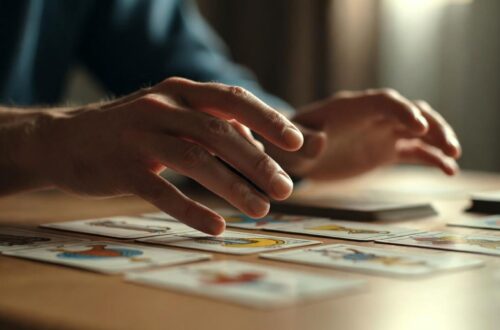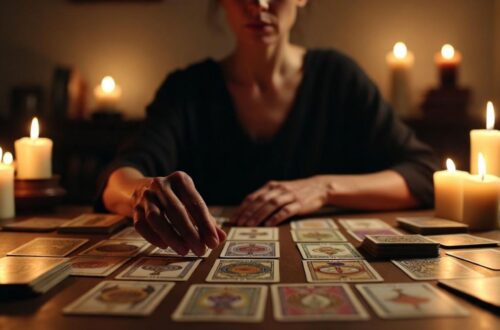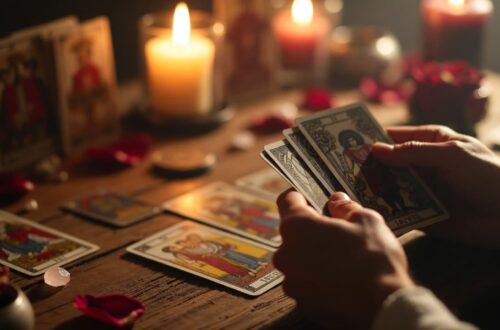
There’s a strange moment that happens when you sit down with a tarot deck for self-reflection. The room might be quiet, maybe there’s tea going cold beside you, and the cards feel heavier than usual. Not physically heavy, but emotionally—like they’re carrying questions you haven’t quite said out loud yet. This is exactly where Tarot Spreads For Self Reflection begin to feel meaningful.
That’s the thing about tarot for self-reflection. It’s not really about predicting the future. It’s more like holding up a slightly crooked mirror to your inner world and noticing what you’ve been avoiding, or misunderstanding, or quietly hoping for. Tarot Spreads For Self Reflection work in this way, helping you pause and observe your thoughts and emotions more honestly.
And tarot spreads—those little patterns you lay the cards into—are basically frameworks for that mirror. When used as Tarot Spreads For Self Reflection, they guide your attention toward different parts of your inner experience.
They give your thoughts somewhere to go.
Below are several Tarot Spreads For Self Reflection designed specifically for personal insight. Some are simple. Some are messy. All of them work best when you approach them with curiosity rather than the need for a perfect answer.
Why Tarot Works Well for Self-Reflection
Before getting into spreads, it’s helpful to understand why tarot can be such a powerful self-reflection tool.
Tarot cards are full of symbols—figures walking away from cups, towers struck by lightning, quiet hermits holding lanterns. When you look at these images, your brain naturally starts creating stories and associations.
Psychologically, this works a lot like projective techniques. You see something ambiguous, and your mind fills the space with meaning based on your own emotions and experiences.
So when you pull a card and think, “Oh… this feels like my burnout,” that interpretation didn’t come from the deck alone. It came from you.
In other words, tarot doesn’t just give answers. It helps you notice the answers you already carry.
Preparing for a Self-Reflection Reading
You don’t need a ritual if rituals aren’t your thing. But a little intentional pause helps.
Maybe you shuffle slowly and think about the question you want to explore. Maybe you write it down. Maybe you just sit for a moment and breathe.
Self-reflection tarot works best when your question is open rather than demanding.
Instead of asking:
“What will happen next month?”
Try asking:
“What should I understand about my current situation?”
The spreads below are designed for that kind of exploration.
1. The Three-Card Inner Check-In
This is one of the simplest spreads, but it’s surprisingly revealing.
Layout:
- Where I am right now
- What I’m struggling with
- What might help me move forward
That’s it. Just three cards.
But when you actually sit with them, things can get interesting. Sometimes the second card—the struggle—feels painfully accurate. Other times the third card suggests something you didn’t expect at all.
Maybe the card for “help” isn’t action. Maybe it’s patience. Or boundaries. Or rest.
The beauty of this spread is that it doesn’t overwhelm you with information. It just highlights a small emotional map of the moment.
Also Read: The Perceived Risks Of Tarot Readings – 2026
2. The “What Am I Not Seeing?” Spread
Self-reflection is often about blind spots.
We all have them.
This spread gently pokes at those areas.
Layout:
- What I believe is happening
- What is actually influencing the situation
- What I’m not seeing clearly
- What could help me understand better
Sometimes card three hits like a small emotional thunderbolt.
Not in a dramatic mystical way. More like that quiet realization when you think:
Oh… I’ve been avoiding that.
And the fourth card isn’t necessarily a solution. It might just suggest a direction—communication, patience, stepping back, or even confronting something uncomfortable.
3. The Past–Present–Future Reflection Spread
Yes, this is a classic spread, but when used for self-reflection it becomes less about predicting events and more about understanding patterns.
Layout:
- Past influence
- Present mindset
- Possible direction if things continue
The key here is to focus on emotional patterns rather than literal predictions.
Maybe the past card reveals an old belief still shaping your choices. Maybe the present card shows exhaustion or hope or defensiveness. The future card might simply reflect the emotional trajectory you’re currently on.
You’re not locked into it.
But it can show where the road is pointing.
4. The Five-Card Personal Insight Spread
This spread digs a little deeper and works well when you’re trying to understand yourself during a confusing period.
Layout:
- My current energy
- Something I need to acknowledge
- Something I need to release
- Something I should nurture
- A guiding message for now
Card three—what to release—often becomes the emotional core of the reading.
Sometimes it’s a mindset. Sometimes it’s resentment. Sometimes it’s unrealistic expectations you’ve been holding onto.
And card four usually feels softer. It points to something worth protecting or growing—confidence, creativity, patience, curiosity.
This spread tends to feel less like analysis and more like a quiet conversation with yourself.
5. The Shadow Reflection Spread
This spread is for deeper introspection, especially when you suspect something inside you is being ignored or suppressed.

Shadow work doesn’t mean darkness or negativity. It simply means exploring parts of yourself that usually stay hidden.
Layout:
- A hidden aspect of myself
- Why this part exists
- How it affects my behavior
- How I can work with it rather than against it
Sometimes this reading feels uncomfortable. And that’s okay.
Maybe the hidden aspect is fear of rejection. Maybe it’s competitiveness. Maybe it’s vulnerability disguised as sarcasm.
The goal isn’t to judge that part of yourself.
The goal is to understand it.
6. The Decision Clarity Spread
When you’re stuck between options, tarot can help clarify how you actually feel.
Layout:
- My true feelings about the situation
- What is influencing my hesitation
- What I gain if I move forward
- What I gain if I wait
- Advice for making the decision
Notice that this spread doesn’t tell you what to choose.
Instead it shows emotional consequences and motivations.
Sometimes the cards reveal that your hesitation isn’t really about logic at all—it’s about fear, attachment, or uncertainty about your own worth.
That kind of awareness can be more valuable than a yes or no answer.
Tips for Reading Tarot for Yourself
Reading for yourself can be tricky because your mind wants certainty.
But self-reflection tarot works best when you let the interpretation stay a little open.
A few gentle tips:
- Write things down.
Keeping a tarot journal can reveal patterns over time. Sometimes a card that confused you today makes perfect sense two weeks later. - Don’t rush interpretations.
Sit with the cards. Notice the imagery. Notice your first emotional reaction. - Allow messy answers.
Not every reading needs to form a perfect narrative. - Sometimes tarot gives fragments. And those fragments slowly make sense later.
- Avoid asking the same question repeatedly.
If you keep pulling cards about the same issue in one sitting, it usually just creates confusion.
When Tarot Becomes a Personal Dialogue
Over time, tarot for self-reflection starts to feel less like “reading cards” and more like a personal dialogue.

You begin recognizing certain cards that show up during specific emotional states. You notice how your interpretations change depending on your mindset.
And occasionally there’s that quiet moment where you look at a card and think:
Okay… I know exactly what this is pointing at.
Not because the deck predicted something.
But because it helped you listen to yourself a little more honestly.
Also Read: Love Tarot Reading Meanings Explained
Final Thought
Tarot spreads for self-reflection aren’t really about predicting anything. They’re more like small tools that help you pause and look inward for a moment. The cards don’t magically know your life, but the symbols and questions they bring up can make you notice feelings, patterns, or thoughts you might have been ignoring.
Sometimes a reading feels clear right away. Other times it’s confusing, or the meaning only makes sense later. That’s normal. Self-reflection is rarely neat or perfectly logical.
In the end, tarot simply creates space to ask yourself honest questions. The real insights don’t come from the cards—they come from the way you respond to them.
Frequently Asked Questions (FAQs)
Q. Can tarot really help with self-reflection?
Yes, many people use tarot as a tool for self-reflection. The cards contain symbols and imagery that can trigger thoughts, emotions, and personal insights. Instead of predicting the future, tarot can help you explore your feelings, patterns, and perspectives about a situation.
Q. Do I need to be psychic to read tarot for myself?
No, you don’t need any psychic abilities. Self-reflection tarot is more about intuition and interpretation. Anyone can learn to read the cards by paying attention to the imagery, meanings, and their own emotional responses.
Q. How often should I do a tarot reading for self-reflection?
There’s no strict rule. Some people read tarot daily as a quick check-in, while others do deeper spreads once a week or when they’re facing an important decision or emotional situation.
Q. What is the best tarot spread for beginners?
Simple spreads like the three-card spread (past–present–future or situation–challenge–advice) are great for beginners. They’re easy to interpret and still offer meaningful insights without feeling overwhelming.
Q. What if I don’t understand the cards I pull?
It’s normal to feel confused sometimes. Try looking at the card imagery, writing down your first impressions, or checking a guidebook. Sometimes the meaning becomes clearer after a little time and reflection.