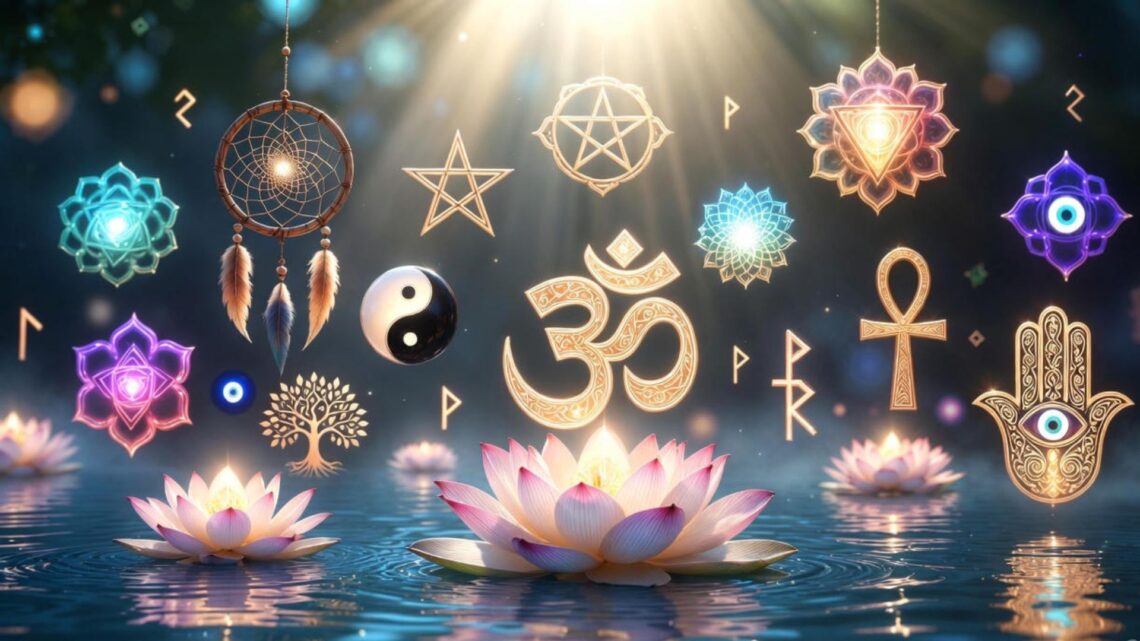
Maybe you’ve seen symbols like the Om, lotus flower, chakras, or a dreamcatcher on a necklace, tattoo, or Instagram post and wondered, “What do these actually mean?” That’s where Spiritual Symbols And Their Meanings come in.
These symbols are images or signs carrying deeper meaning — little guides for understanding life, death, the universe, and energy. Humans have been using them for thousands of years, from cave carvings to modern rituals.
They’re not just Eastern icons; every culture has its own symbols pointing to something bigger than ourselves. Even today, people wear them, meditate on them, or use them in rituals, proving that Spiritual Symbols And Their Meanings are timeless.
What Are Spiritual Symbols, Anyway?
A spiritual symbol isn’t just a pretty design — it’s a mental tool. Symbols help us grasp big, abstract ideas, like balance or growth, without needing paragraphs of explanation.
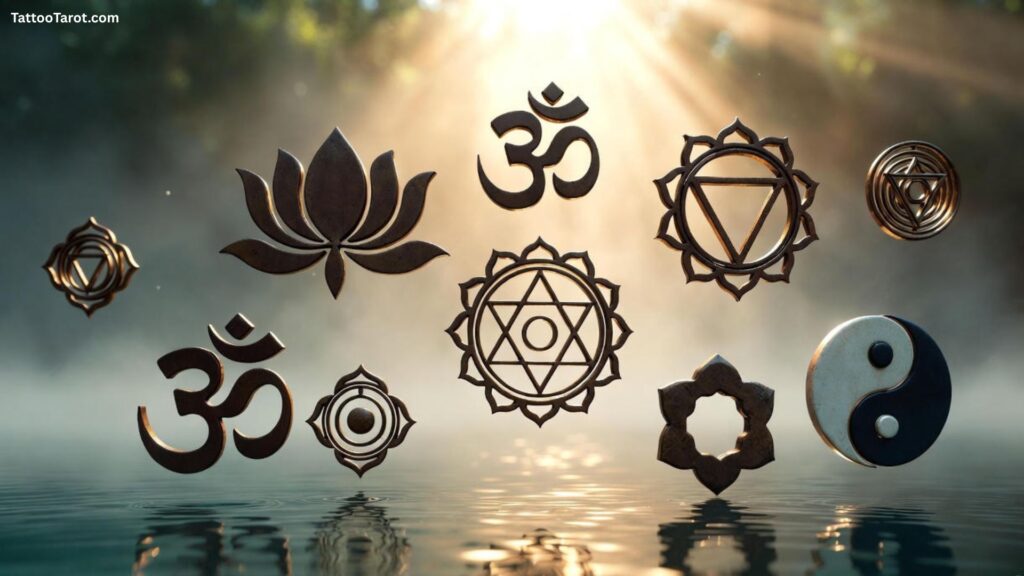
Take the lotus flower: it rises from muddy water to bloom beautifully, symbolizing how we can overcome life’s mess and emerge enlightened. Unlike alchemy symbols, which are literal, spiritual symbols represent concepts and ideas.
Even Carl Jung noted that universal symbols, or archetypes, connect with people on a deep, almost instinctual level. That’s why spiritual symbols endure — they’re meaningful, adaptable, and help us make sense of ourselves and the world.
Powerful Spiritual Symbols
1. Cross
This one’s obvious. Christians recognize it instantly. It’s Jesus on the cross. Simple shape, massive meaning — love, sacrifice, redemption. Even just looking at it can make people stop and think about faith or moral purpose.
How to use it: Mostly Christians wear it as a necklace or keep it at home to remind themselves of their beliefs. But even if you’re not religious, you can think of it as a reminder of sacrifice, love, or staying committed to something bigger than yourself.
2. Vajr / Dorje
This one’s from Tibetan Buddhism. Picture a diamond + a thunderbolt. That’s basically what it symbolizes: indestructibility and unstoppable spiritual energy. It’s all about enlightenment and spiritual power that can’t be broken.
How to use it: Monks use it in rituals, but you can hold one while meditating to focus your mind or imagine channeling clarity and inner strength.
Also Read: Occult Symbols You Should Know the Meaning Of
3. Hamsa
You know the hand with an eye in the middle? That’s Hamsa. Fun fact: it shows up in lots of religions — Islam (Hand of Fatima), Christianity (Hand of Mary), Judaism (Hand of Miriam). Hindus and Buddhists also see it as representing the five senses.
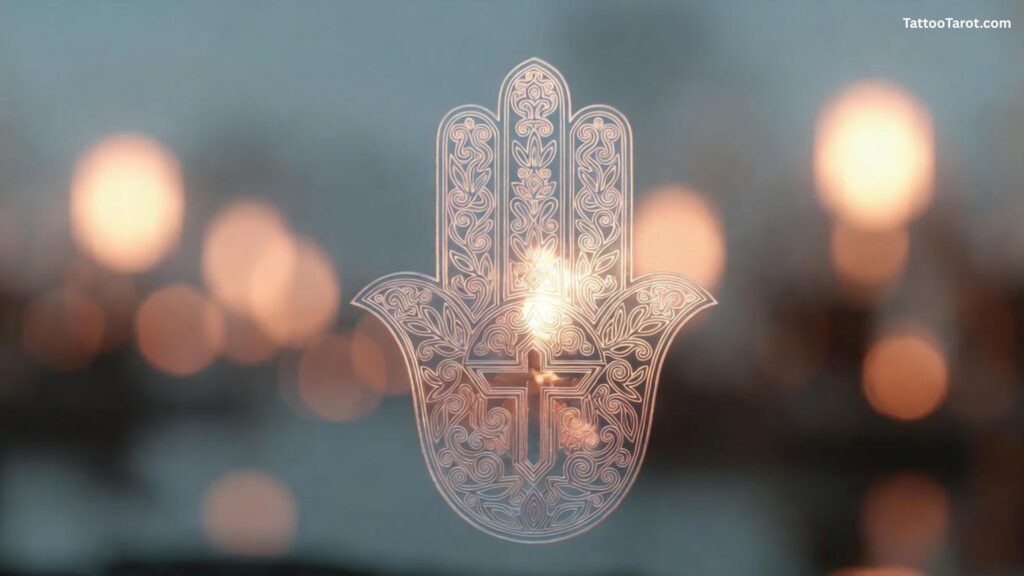
How to use it: Mostly as a protective charm, like a spiritual shield against negativity. Some people also see it as a power symbol — success, luck, that kind of thing.
4. Khanda
This is the Sikh symbol — a double-edged sword with a circle in the middle and two curved swords on the sides. It’s all about divine power and justice, and balancing spiritual life with the real world.
How to use it: Sikhs wear it as a symbol of faith, but it’s also just inspiring for anyone — like a mental image of strength and courage, spiritual or physical.
5. Lotus Flower
The lotus grows out of mud but blooms clean and bright. Humans looked at it and said, “Yep. That’s us.” It’s the ultimate symbol of purity, spiritual awakening, and rising above challenges.
How to use it: Meditate on a lotus flower in your heart, or do the lotus pose. The symbol itself reminds you that you can grow through messy life situations and come out spiritually stronger.
6. The Seal Of Melchizedek
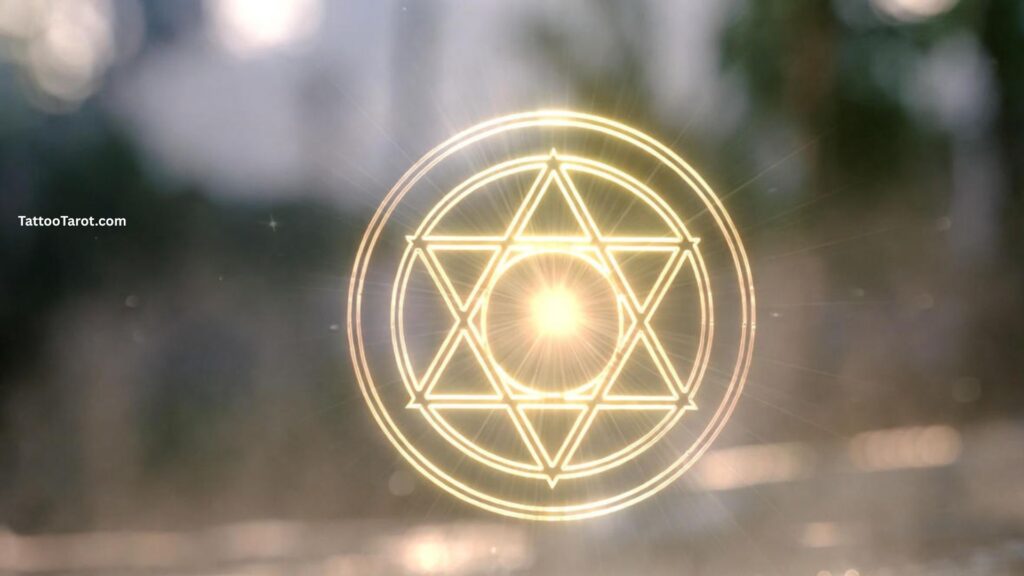
Alright, so this one’s kind of obscure, but really cool if you like ancient symbols. The Seal of Melchizedek comes from biblical stuff and some other really old texts. Visually, it’s two squares kind of sliding into each other, making an eight-pointed star. And back in the day, stars weren’t just decorations — people literally thought they were gods. So, in a spiritual sense, this star became tied to Jesus Christ and his whole divine energy vibe.
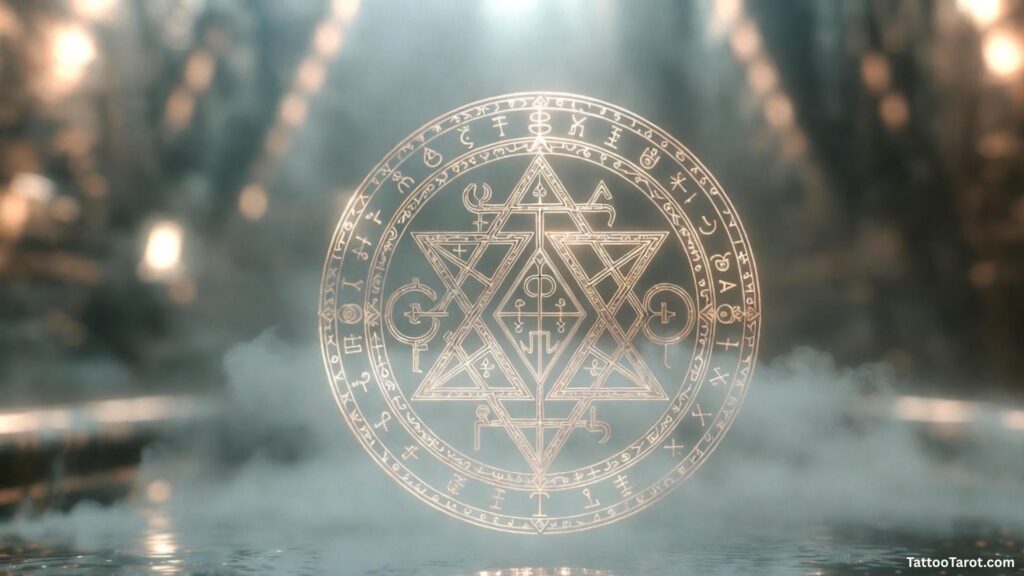
Sometimes you’ll see a circle wrapped around it — either inside or outside the star — which, of course, is just the universal symbol for eternity. Makes sense, right? Stars = divine, circle = forever, put them together = a kind of “this is eternal divine energy” symbol.
How to use it: Honestly, you don’t need to overthink it. A lot of people use it in mindfulness or meditation, kind of as a mental focus point. Picture it, breathe, and let it remind you that there’s a balance between the spiritual stuff and the “oh my god, I have bills to pay” stuff in life.
7. Yin Yang
Okay, you definitely know this one. The Yin-Yang is that black-and-white circle with the two little dots inside. Super famous, right? It comes from Taoist philosophy and is basically about balance — the light and the dark, male and female, rest and action, chaos and calm. Life is messy, but this little circle is a visual reminder that everything is connected and, ideally, should balance out.
How to use it: People have even created entire yoga styles inspired by this — Yin Yang yoga, which blends the slow, long stretches of Yin with the more active, heat-building Yang. In meditation, you can just stare at it or picture it spinning in your mind, and let it remind you to find your own inner equilibrium. It’s kind of a “life is messy, but you can flow with it” symbol.
Also Read: Protection Symbols And What They Represent
8. Antahkarana
This one looks complicated — I won’t lie. The Antahkarana is a multi-dimensional symbol that’s all about the chakras. Specifically, it contains three sets of seven points — so yeah, chakras times three — which sounds wild, but basically it’s a bridge between your conscious and unconscious mind. In Tibetan Buddhism, it’s a big deal because it’s also thought to ward off negative energy.
How to use it: Meditation is the big one here. People use it to try to pull their attention inward, become aware of their mind, and connect with something higher — your inner wisdom, your “higher self,” whatever you want to call it. Some yogic practices with this symbol involve “watching the mind” instead of just thinking, which is basically fancy-talk for noticing your thoughts without getting caught up in them.
9. Tree Of Life
Ah, the Tree of Life — probably one of my favorites because it’s so universal. You’ve got roots digging deep into the earth and branches stretching to the sky, and it’s supposed to symbolize connection — like, everything is connected: earth, humans, nature, the cosmos, you name it. In Celtic mythology, it’s especially important. They’d even have ceremonies honoring the changing seasons, using the tree as a spiritual anchor.
Across cultures, the meaning changes slightly, but the overall vibe is the same: life is connected, cyclical, and sacred.
How to use it: You can use it in meditation as a focal point, imagining your own roots going deep into the earth and your “branches” reaching out into the universe. Some people even just put a little Tree of Life symbol somewhere in their home and use it as a reminder to stay grounded while also aspiring to grow.
10. Eye of Horus
Now we’re going ancient Egypt. The Eye of Horus is one of those symbols that immediately grabs your attention. It’s the eye of the god Horus, who was kind of the god of the sun and moon — basically the all-seeing falcon. Legend says Horus lost his eye fighting Set, the god of deserts and chaos, but then it was magically restored by Thoth, the god of wisdom. Because of that story, the eye became a symbol of healing, protection, and spiritual insight.
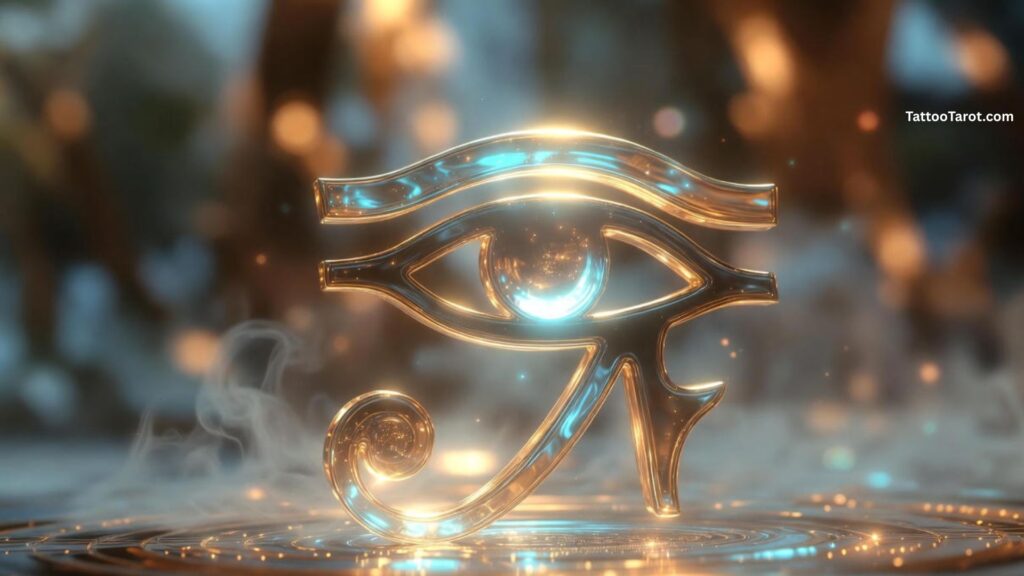
How to use it: Most people wear it as an amulet or talisman for protection — think of it as a spiritual security blanket. But it’s also for health, clarity, and generally trying to keep yourself on the “right” path spiritually. You can meditate on it, visualize it, or just keep it nearby as a reminder that you’ve got some kind of cosmic backup when life gets messy.
Conclusion
At the end of the day, spiritual symbols are just little tools we’ve been using forever to make sense of life, the universe, and ourselves. Some are obvious, some are mysterious, but all of them can help you pause, reflect, or feel connected to something bigger. You don’t need to overthink them — just notice them, feel them, maybe meditate on them, and let them guide you in your own way. They’re reminders that life is messy, balance matters, and everything’s connected, even when it doesn’t feel like it.
Frequently Asked Questions (FAQs)
Q. What exactly is a spiritual symbol?
Ans: A spiritual symbol is basically a sign, image, or shape that represents a bigger idea — something like balance, protection, enlightenment, or connection to the divine. Think of it as a visual shortcut for concepts that are hard to explain in words.
Q. Are spiritual symbols only for certain religions?
Ans: Not at all. Sure, some symbols are tied to specific traditions — like the cross in Christianity or the Khanda in Sikhism — but lots of them are universal. People from all backgrounds can use them to meditate, reflect, or just feel connected.
Q. Do I need to believe in a religion to use them?
Ans: Nope. You don’t have to follow any religion. Spiritual symbols can be practical tools for mindfulness, meditation, or self-reflection. It’s more about what they mean to you, personally.
Q. How do I “use” a spiritual symbol?
Ans: There’s no single way. Some people wear them as jewelry, put them in their homes, meditate on them, or just keep them in mind as a reminder of a value or intention. It’s whatever helps you feel grounded or connected.
Q. Can one symbol mean different things?
Ans: Absolutely. For example, the lotus flower can mean purity, growth, spiritual awakening, or even resilience, depending on the culture or person. That’s the beauty — the meaning can grow with you.