Protection Symbols And What They Represent — long before self-help books, therapy, or modern ways of explaining fear and comfort. Before words, there were signs: objects, shapes, and charms people carried or wore because they felt like they did something.
People didn’t need proof. If it made them feel safer, calmer, or less alone, that was enough. Across cultures and history, symbols have been used to protect against bad luck, jealousy, illness, or unseen forces. Sometimes religious, sometimes purely symbolic, they were tools — a way to say, “I can’t control everything, but I’m not defenseless.”
Today, they still show up on jewelry, walls, tattoos, and keychains. People may explain them differently now, but the reason hasn’t changed: we want to feel protected. Each symbol carries layers of meaning — awareness, balance, grounding, courage, and renewal — connecting us to generations who worried about the same things, just with different language.
The Evil Eye
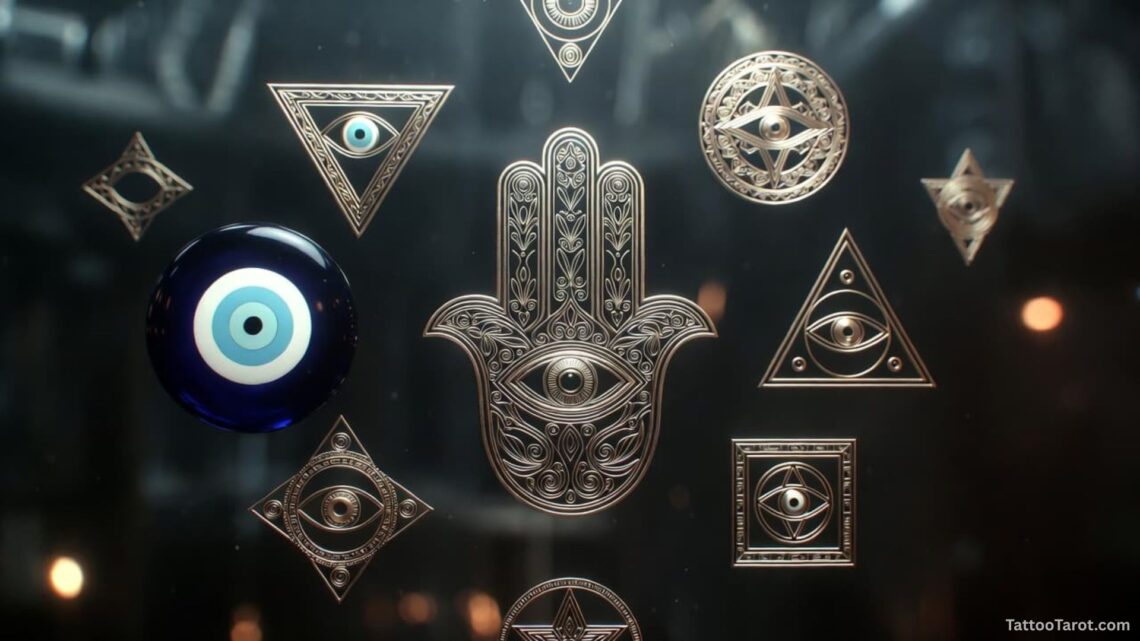
The evil eye is everywhere. You’ve probably seen it even if you never really thought about it. Blue glass eyes hanging in homes. Bracelets with a small eye charm. Jewelry you see in markets, online shops, or worn casually by someone who might not even call themselves spiritual.
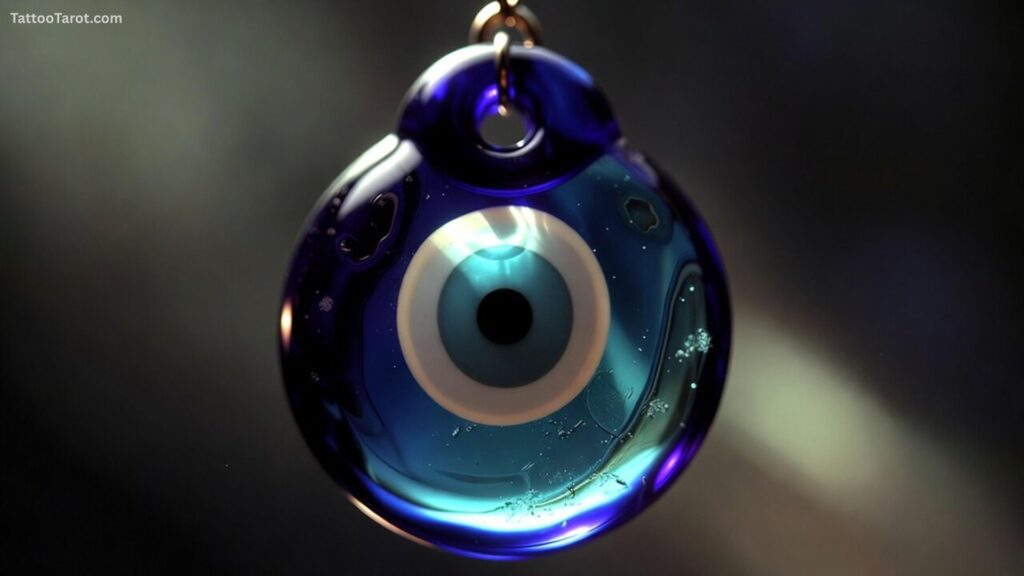
The belief itself is ancient. Like, really ancient. Ancient Greece, Rome, Middle Eastern cultures — all had some version of the same idea: sometimes harm doesn’t come from action. It comes from attention.
Jealousy. Envy. Ill intent. Even accidental resentment.
The evil eye symbol exists to block that. Or reflect it. Depending on the tradition, it either absorbs negative energy or sends it right back where it came from. Either way, the point is protection.
People didn’t believe everyone with bad energy was evil. Sometimes someone could harm you without meaning to. Looking at your success, your happiness, your health — wanting it, even quietly — was thought to be enough to cause imbalance.
So the evil eye became a kind of warning sign. A watcher. A mirror.
That’s why people hang it near doors or wear it on the body. It’s not aggressive. It’s observant. It says, “I see what’s coming toward me.”
What’s interesting is how universal it is. Different cultures changed the colors or shapes slightly, but the eye itself stayed. That alone tells you how deeply people believed in the power of attention — and the need to protect yourself from it.
Also Read: How Accurate Are Online Tarot Readings?
Lapis Lazuli
Lapis lazuli doesn’t feel subtle. It feels heavy with history.
That deep blue color almost doesn’t look natural, especially when you notice the gold flecks running through it. Ancient people definitely noticed that too. They didn’t see it as just a stone — they saw the sky in it. The stars. Something divine.
In ancient Egypt, lapis lazuli was everywhere that mattered. Amulets. Jewelry. Burial objects. It was used to protect souls in the afterlife, which tells you how seriously they took its power.

As a protective symbol, lapis lazuli is mostly about the mind. Clarity. Truth. Guarding yourself from mental confusion, manipulation, or emotional chaos. It’s believed to strengthen intuition and inner vision, which makes sense given how often it’s linked to wisdom and spiritual insight.
People today still use lapis lazuli when they feel mentally overwhelmed. Too many thoughts. Too much noise. Too many outside opinions.
It’s not flashy protection. It’s quiet. Like putting a lock on your thoughts and deciding who gets access.
Even if you don’t believe in psychic attacks, there’s something calming about having a symbol that represents mental boundaries. A reminder to slow down and listen inward instead of reacting to everything around you.
The Hamsa Hand
The hamsa hand shows up in a lot of places, often without explanation. You’ll see it hanging on walls, turned into jewelry, worked into designs — sometimes very ornate, sometimes super simple.
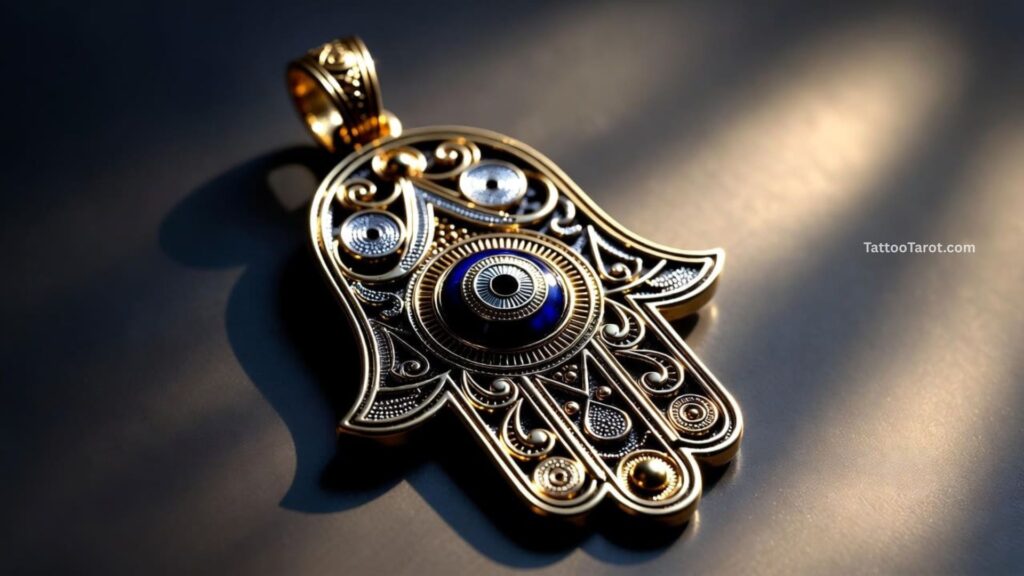
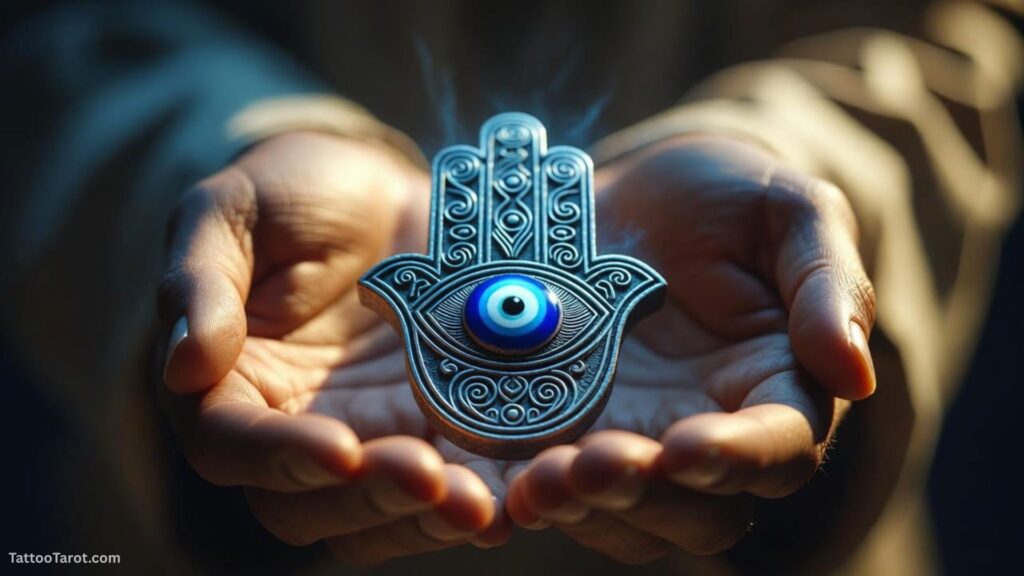
It’s known as the Hand of Fatima in Islamic tradition and the Hand of Miriam in Jewish tradition, but it goes beyond religion. At its core, it’s a protection symbol. A hand held up, open, saying “stop.”
The open palm is important. It’s not a fist. It’s not threatening. It’s protective without being aggressive.
Often there’s an eye in the center, which connects it to the evil eye concept — awareness, watchfulness, not letting harm sneak in unnoticed.
Each finger is said to represent qualities like patience, faith, compassion, or strength, depending on the tradition. But honestly, you don’t need to memorize all that for it to work as a symbol. People have always understood it intuitively.
Historically, the hamsa was placed where protection mattered most — homes, entrances, spaces where families gathered. It wasn’t hidden. It was meant to be seen.
Today, people wear it for all kinds of reasons. Some spiritual. Some cultural. Some just because it feels grounding.
And that’s kind of the point. Symbols don’t need everyone to agree on their meaning. They just need to mean something to the person using them.
Carnelian
Carnelian feels different from the other symbols. It’s not calm. It’s not quiet. It’s active.
The colors alone — orange, red, burnt amber — feel alive. This is a stone that’s always been associated with movement, courage, and physical protection.
Warriors carried it. Travelers wore it. People believed it could protect against accidents, bad luck, and fear. Not by making danger disappear, but by giving the wearer strength to face it.
Carnelian is connected to the sacral chakra, which governs creativity, emotion, and personal power. That makes sense, because this stone isn’t about hiding. It’s about standing firm.
People often turn to carnelian when they feel stuck, scared, or drained. It’s meant to help push through doubt and remind you of your own resilience.
Protection doesn’t always look like a shield. Sometimes it looks like confidence.
The Moon
The moon has always meant something to people. Before clocks, calendars, or streetlights, the moon was how people tracked time, seasons, and cycles.
As a symbol of protection, the moon represents rhythm. Change that isn’t chaotic. Renewal that happens naturally.
The moon reminds people that darkness isn’t permanent. It comes in phases. It leaves. It returns.
Different cultures gave different meanings to different phases. The full moon often symbolized power, clarity, and heightened awareness. The new moon symbolized release, cleansing, and new beginnings.
People still plan rituals, intentions, or quiet reflection around lunar cycles. Not because the moon “controls” them, but because it offers structure in a world that often feels random.
There’s something deeply comforting about knowing the moon will rise, no matter what kind of day you had.
Also Read: Sacred Geometry Tattoo Meanings
Sapphire
Sapphire has long been linked to authority, wisdom, and protection. Kings wore it. Religious leaders wore it. It wasn’t just about wealth — it was about judgment and clarity.
People believed sapphire could protect against envy, dishonesty, and mental imbalance. It was thought to keep the mind steady and the heart aligned.
Today, sapphire is still associated with emotional protection. Calm thinking. Truth. Balance.
It’s a symbol for people who want protection without chaos. Who want steadiness instead of intensity.
Sometimes protection means quiet strength, not force.
Keep Yourself Protected
Looking at spiritual symbols of protection isn’t about superstition. It’s about understanding how humans have always dealt with fear, uncertainty, and the unknown.
These symbols survived because they worked — emotionally, psychologically, spiritually, or all three.
You don’t need to believe every story behind them for them to matter. What matters is intention. Awareness. The feeling of grounding they offer.
Wearing a symbol, placing it in your home, or simply understanding its meaning can change how you move through the world. It reminds you that protection isn’t always external.
Sometimes it’s a reminder to stay aware, grounded, and connected to something bigger than whatever problem you’re facing right now.
And that’s why these symbols are still here. Not because they’re trendy. But because humans keep needing them.
Conclusion
At the end of the day, protection symbols aren’t about superstition. They’re about helping people feel safe, grounded, and supported in an unpredictable world. They don’t promise perfect protection — they’re reminders, small anchors you can carry, wear, or place in your space.
You don’t need to believe every story behind them. What matters is how they make you feel — aware, strong, balanced, and resilient. Protection symbols aren’t about living without fear; they’re about moving through life knowing you’re not completely unguarded.
Frequently Asked Questions ( FAQs )
Q1. What are protection symbols?
Ans: Protection symbols are objects, shapes, or signs people have used across cultures to guard against negative energy, bad luck, or harmful intentions. They’ve been worn, carried, or placed in homes for centuries as a way to feel safer and more grounded.
Q2. Do protection symbols actually work?
Ans: That depends on how you look at it. For some people, they’re deeply spiritual and energetic. For others, they work on a psychological level — offering comfort, focus, or a sense of control. Either way, their value comes from intention and belief, not scientific proof.
Q3. Are protection symbols tied to specific religions?
Ans: Some are, but many go beyond religion. Symbols like the evil eye or the hamsa appear in multiple cultures and belief systems. Over time, people have adopted them in personal ways that aren’t strictly religious.
Q4. Can anyone use protection symbols?
Ans: Yes. You don’t need to follow a certain faith or tradition to use them. Many people choose protection symbols based on personal meaning, cultural connection, or simply how they make them feel.
Q5. How do people usually use protection symbols?
Ans: They’re commonly worn as jewelry, displayed in homes, carried in pockets, or even tattooed. There’s no “right” way to use one — it’s about what feels meaningful and protective to you.