So, the poison tree tattoo… it’s kind of wild when you think about it. It all comes from William Blake’s poem “A Poison Tree” from 1794. I mean, yeah, over 200 years ago, Blake was writing about anger, resentment, and all that stuff we try not to feel, and now people are literally putting it on their bodies. Like, on purpose. Inked forever. There’s something kind of beautiful about that, even if it’s a little dark. When people talk about the Poison Tree Tattoo Meaning, this is exactly what they’re referring to—the way it captures suppressed emotions, hidden toxicity, and the consequences of unexpressed anger.
Blake’s poem is basically a roadmap of suppressed anger. He writes about how bottling up feelings can grow into something dangerous. And now, in tattoo culture, that metaphor has exploded. People don’t just want “pretty trees” on their arm—they want the meaning, the story, the warning. The poem became a kind of emotional blueprint: it’s about betrayal, resentment, toxic relationships, stuff we hide even from ourselves. And the tattoo takes all of that and puts it in a visual, permanent form.
Blake’s Emotional Blueprint In Ink
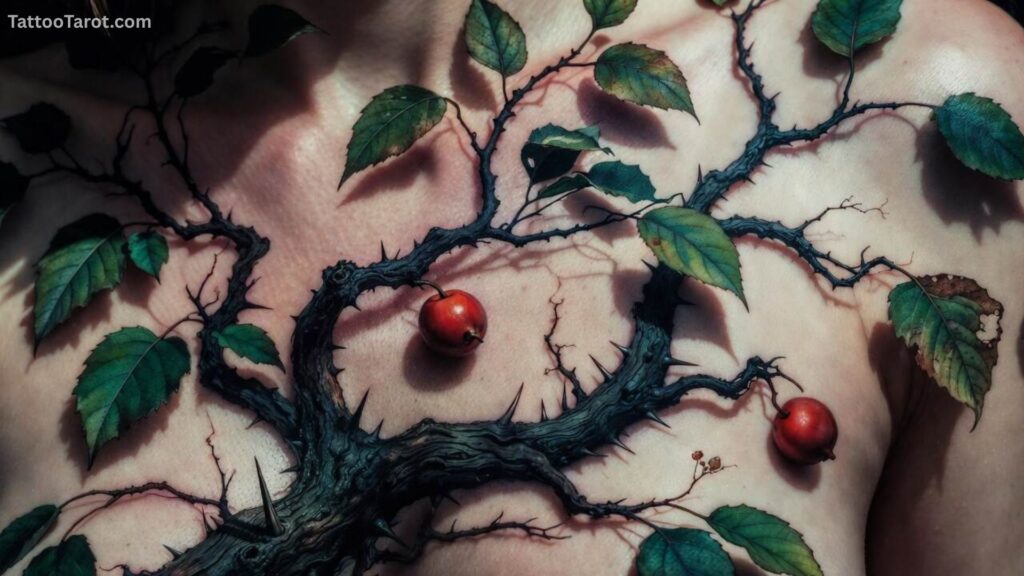
If you actually read the poem, you’ll see the pattern. It starts with anger, then suppression, then—boom—fruit that kills. Not literally, but metaphorically. That’s where tattoo artists come in. They take that story and turn it into something you can carry on your skin. Thorns, leaves, fruit, dark veins in the bark—they all mean something.
People choose this tattoo because it’s like a permanent reminder that emotions left unchecked can fester. And honestly, modern psychology backs that up. Bottling anger isn’t healthy. So when someone picks a poison tree design, it’s kind of like saying, “Yeah, I’ve had anger, I’ve had betrayal, and I see it for what it is.”
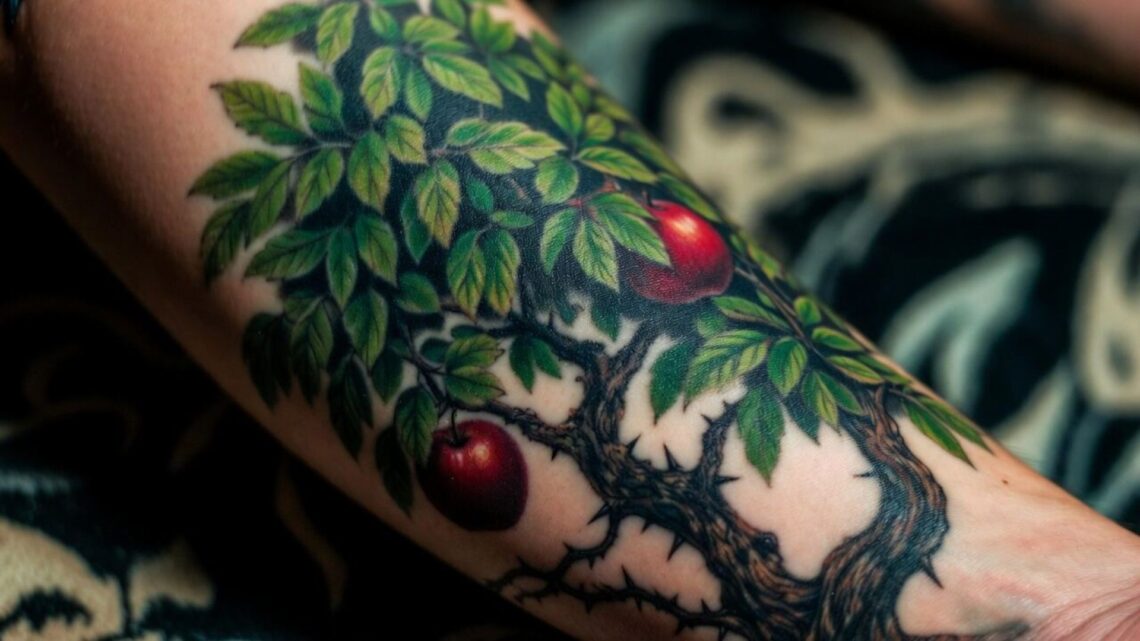
Artists get creative with it. Leaves can be sickly green, fruit can be shiny red but with dark veins creeping in. The tree can look beautiful on the surface but rotten underneath. That duality is the point—it’s literally a visual metaphor for toxic relationships or internalized rage.
Some contemporary artists use it to talk about mental health too. Jeff Dewsnup’s “A Poison Tree (In The Fog)” comes to mind—he uses Blake’s imagery to explore depression and anxiety. And it’s kind of ironic, because he chose mental health over chasing a pro soccer career. Only like 1.4% of college soccer players make it pro, and Dewsnup said, “nah, I’ll take my mental health instead.” The tattoo reflects that kind of choice—acknowledging personal struggle and making it visible.
The Messy Beauty Of Contradiction
Here’s where it gets really interesting. Poison tree tattoos are all about contradiction. Beauty and darkness together. Pretty red fruit, green leaves, but then thorns or black veins hidden in the bark. Maybe little skulls tucked into the roots. The tattoo is literally screaming: “things aren’t what they seem.”
It’s like relationships sometimes. You meet someone who seems perfect, or life seems perfect, but under the surface… yeah, there’s poison. That’s what this tattoo shows. Growth and destruction existing in the same space. People love that because it’s messy, it’s real.
I’ve seen tattoos with vibrant green leaves and red apples, but if you look closer, there are tiny signs of decay—rot in the roots, black lines creeping through the bark. You can read the story of a toxic relationship just by looking at it. And that’s the point. It’s not meant to be neat or happy.
Colors That Actually Mean Stuff
People sometimes forget how much color matters. In these tattoos, color is basically a secret language. Like:
- Deep red = anger, passion, blood. Usually on fruit or thorns.
- Black = death, suppression, unconscious stuff. Bark or roots.
- Dark green = envy, toxic growth. Leaves.
- Gold/yellow = temptation, fake beauty. Fruit or light.
- Purple = transformation, mystery, weird spiritual poison. Transitional bits.
- Gray = neutral, numbness, depression. Background or fading elements.
So yeah, colors aren’t just pretty—they’re communicating feelings. You can do gradients to show emotions changing over time. Or go monochrome if you want it stark and raw, focusing on texture and decay instead of emotion.
Basically, the tattoo becomes a kind of emotional shorthand, which is why people pick it over just… a random tree.
Also Read: Protection Tattoo Symbols And What They Mean In 2026
Trees That Show Time
Another cool thing? Some designs use seasons or growth stages to show time. Spring = small feelings, anger just planted. Summer = fruit, resentment growing. Fall/winter = consequences, decay, realization. Some tattoos even show multiple trees or branches representing different relationships or periods in life.
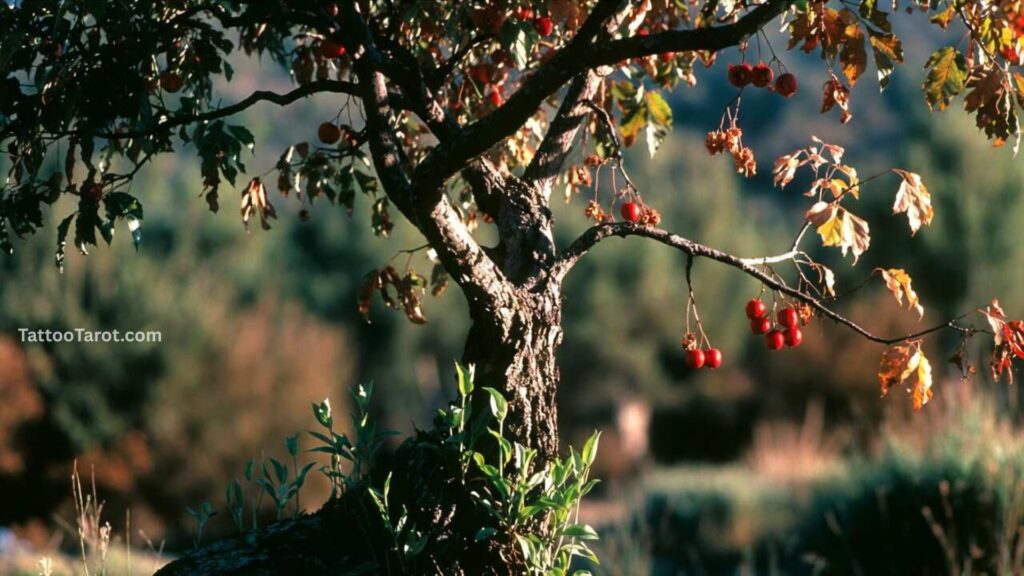
It’s like a timeline etched into your skin. Past trauma is the big fruit-bearing trees. Current healing? Tiny sprouts or pruned branches. That’s why people love it: it turns a static design into a story. You can “read” where someone’s at emotionally just by looking.
Tattoos As Therapy
Here’s the thing that most people miss: poison tree tattoos can be therapeutic. They’re not just decoration. They give a way to externalize emotions that are usually stuck inside. Toxic relationships, family issues, personal anger—they all get visualized. And that helps.
The permanence is part of it. You can’t just swipe it away like a journal entry. But that’s the point. You’re facing your own history, your own anger, every time you see it. And the process of getting it—explaining your experiences to the artist, picking imagery, placing the tree—can actually help you process it.
There’s also a bigger trend in “mental health tattoos,” where body art is more about healing than style. And honestly, it’s kind of smart. Inkl.com says 24% of Americans regret tattoos, mostly because they didn’t think about meaning enough. Poison tree tattoos? Almost always meaningful, so less regret.
Shadow Work And Jungian Stuff
If you like psychology, the poison tree tattoo ties into Jungian ideas too. It’s about embracing the shadow self—the messy, dark parts of you you usually try to hide. By putting that on your body, you’re saying: “Yeah, I see this in me. I acknowledge it.”
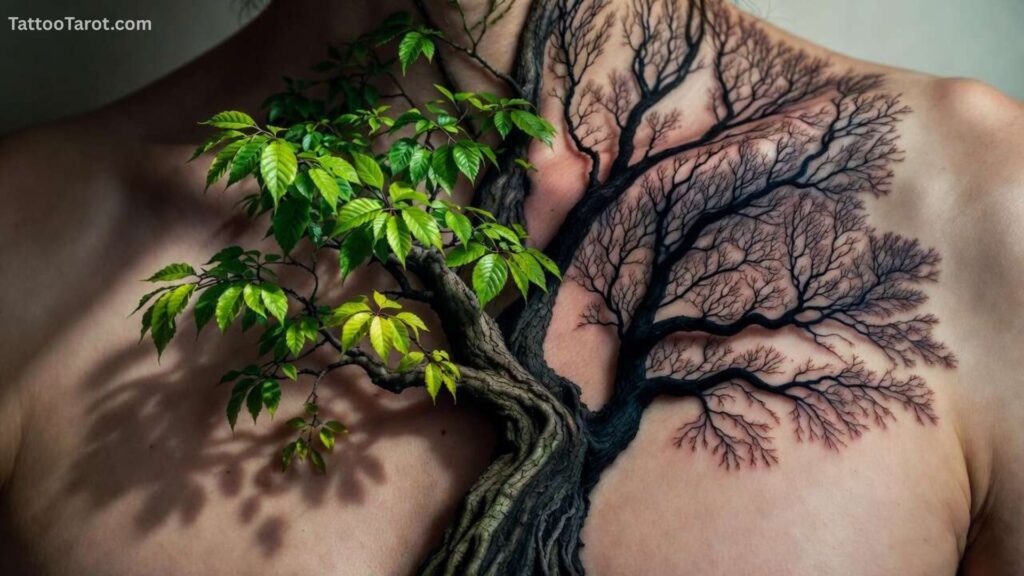
Some designs mix healthy and diseased parts of the tree to show this integration. You’re not pretending the bad parts don’t exist—you’re learning to live with them. And the tattoo is a daily reminder to stay aware of your emotions. Don’t let anger fester. Don’t hide resentment. Just… notice it, deal with it, grow.
Wrapping It Up
The poison tree tattoo is not simple. It’s Blake, psychology, and human emotion all rolled into one design. It’s about anger, suppression, toxic relationships, healing, growth, and shadow work. It’s ugly, beautiful, messy, real.
People love it because it’s meaningful. It’s personal. It’s storytelling you can carry with you forever. Red fruit, green leaves, black veins, hidden decay—they’re all symbols that life isn’t neat. That people aren’t neat. That emotions aren’t neat. And somehow, putting all that on your skin makes it feel a little more manageable, a little less invisible.
So yeah, poison tree tattoos are kind of perfect for anyone who’s ever felt anger, betrayal, or just… complicated. And maybe that’s why they’re still so popular today—Blake was onto something, and we’re still figuring it out, one tattoo at a time.

Also Read: Sacred Geometry Tattoo Meanings
Frequently Asked Questions (FAQs)
Q. What exactly does a poison tree tattoo mean?
Ans: Honestly, it can mean a lot of things, but at its core it’s about anger, suppressed emotions, betrayal, and toxic experiences. Basically, it’s a visual way of saying, “I’ve felt resentment, I’ve dealt with hidden toxicity, and I survived—or at least I’m noticing it now.” People also use it for shadow work or mental health reflection.
Q. Where’s the best place to get a poison tree tattoo?
Ans: There’s no “perfect” spot, really. Some people like arms or legs because there’s more space to show branches, leaves, and fruit. Others do backs or ribs if they want it bigger or more private. Honestly, it depends on how detailed you want it and how visible you want it to be.
Q. How long does it take to heal?
Ans: Like most tattoos, the initial healing is about 2–3 weeks. Full healing—so the colors settle and the skin fully recovers—can take 2–3 months. Which is kind of funny because the tattoo itself is about long-term emotional processing, and healing it physically mirrors that in a weird way.
Q. Do the colors really matter?
Ans: Totally. Every color has meaning. Deep reds for anger, blacks for suppressed stuff or death, greens for envy or toxic growth, gold for temptation or fake beauty. Some people go monochrome if they want it stark, but the colors can add a whole emotional layer to the design.
Q. Can this tattoo be therapeutic?
Ans: Yeah. Many people use it as a way to process emotions, externalize trauma, or mark personal growth. The tattoo becomes a kind of reminder: “don’t let anger fester, acknowledge your feelings, heal.” The process itself—talking to your artist, choosing imagery—can be really cathartic.