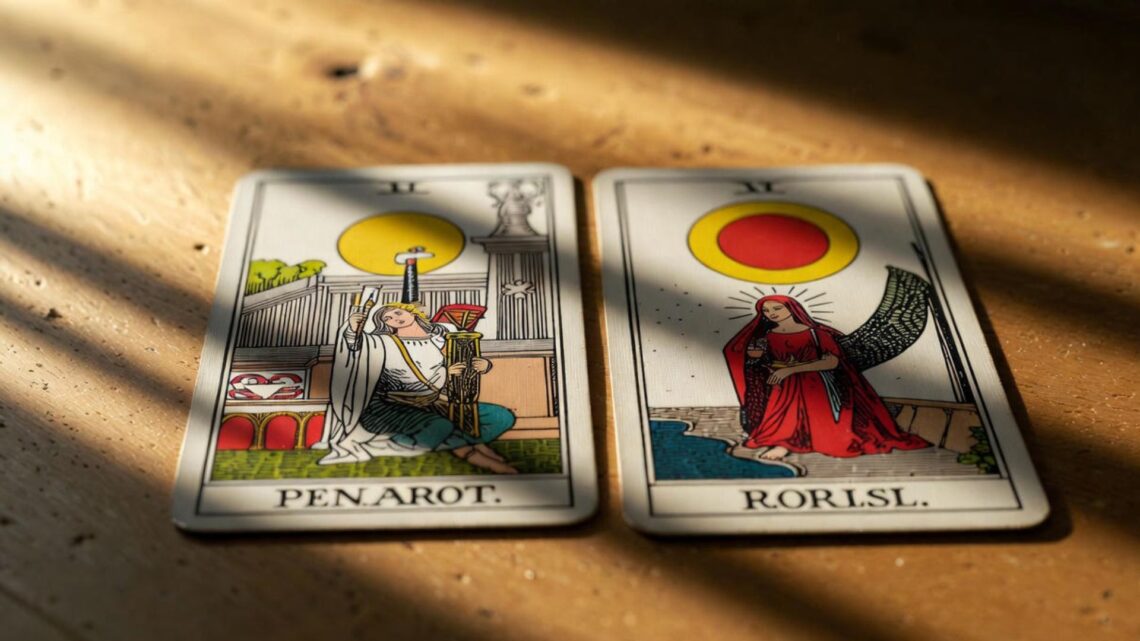
When people first start learning tarot, they usually learn card meanings one by one. The Fool means this. The Lovers mean that. The Tower… yeah, we all know what the Tower does.
But then you actually start reading, and suddenly you’re staring at two cards on the table, sometimes three or four, and your brain freezes a little. Because the cards aren’t meant to be read like flashcards. They’re meant to talk to each other.
That’s where How To Read Tarot Card Combinations really comes in.
Instead of pulling one meaning out of a book and stopping there, learning how to read tarot card combinations asks a different question: how do these cards interact? Are they agreeing? Arguing? Is one explaining the other? Is one softening the blow, or making it louder?
Once you start reading this way, tarot stops feeling stiff. It starts feeling like a story unfolding instead of a test you’re trying to pass.
You don’t need to use every technique below. Honestly, you probably won’t. Some will click with you, some won’t, and that’s fine. Think of these as tools you can grab when you’re stuck — not rules you have to follow perfectly.
1. Keywords (Start Here. Always.)
If you’re a beginner, or even if you’re not but your brain is tired, keywords are your best friend.
This is the simplest way to read combinations, and it works way better than people expect.
Every tarot card has a few core ideas attached to it. Not the whole essay-length meaning — just the basics. One word. Maybe a short phrase.
That’s all you need.
How this actually works
You pick one keyword or phrase for each card. Don’t try to be clever. Just grab the first thing that feels right.
Then you put them next to each other and see what happens.
That’s it. No magic trick.
Example
- Eight of Wands → travel, movement
- Six of Cups → childhood, past, old friends
Put them together and suddenly you’re talking about travel related to the past, or going to see people you grew up with, or reconnecting with childhood friends after being apart.
Another one:
- High Priestess → intuition
- Eight of Pentacles → practice, repetition, learning
That’s pretty clearly developing intuitive skills. Learning to trust your intuition by actually working with it, not just thinking about it.
You can shuffle keywords around until something clicks. Tarot isn’t grading you. If the meaning makes sense in context and feels true, you’re doing it right.
Also Read: How To Learn Tarot Cards Reading – 2026
2. Numerology (Don’t Panic, It’s Not Math)
People hear “numerology” and immediately check out. But tarot numerology is very low effort. You’re not calculating anything. You’re just noticing patterns.
Every card has a number. Numbers repeat. That repetition matters.
How to look at it
First, see if the numbers match.
If both cards have the same number, that number’s theme gets louder.
Example
- Two of Cups
- Two of Wands
Twos are about partnership, choices, and connection. Together, these cards could easily be a couple planning their future, or two people deciding what direction to go in together.
Now look at number ranges.
- 1–3 → beginnings
- 4–6 → building, middle phase
- 7–10 → challenges, endings, wrapping things up
If both cards fall in the same range, they’re talking about the same stage of a cycle. That alone can tell you a lot about timing and development.
3. Symbolism (This One Gets Personal)
Symbolism is where tarot stops being generic and starts being yours.
Sometimes two cards share a symbol and it jumps out immediately. Other times it’s subtle. And sometimes… there’s nothing. That’s okay.
What to do
Put the cards next to each other and actually look at them. Not just the title — the picture.
Do you see:
- The same object?
- The same colour?
- Similar scenery?
- Repeating themes like water, fire, or light?
If yes, pause there.

Example
- Temperance
- Judgement
Both cards show archangels. That’s not accidental. For some readers, this points to divine timing, spiritual protection, or guidance during a hard moment.
Here’s the important part: symbols have shared meanings and personal ones.
Books can tell you what an angel usually represents. Your own life experience tells you what it means to you. Both matter.
4. Elements (Especially Helpful With Minor Cards)
The elements really shine when you’re working with Minor Arcana.
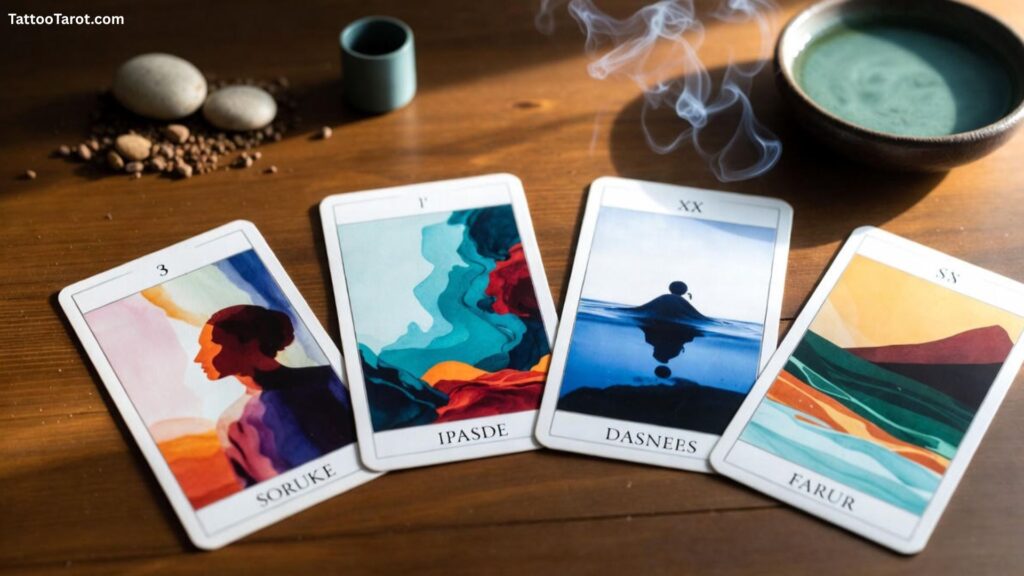
Each suit lines up with an element:
- Cups → Water (emotions, relationships)
- Pentacles → Earth (work, money, stability)
- Swords → Air (thoughts, communication)
- Wands → Fire (action, desire, energy)
How to use this
If both cards share the same element, that energy is emphasized.
Example
- Three of Pentacles
- Eight of Pentacles
That’s a lot of Earth. Work, effort, long-term goals, skill-building. This combo is about showing up and putting the work in.
If the elements are different, think about how they interact. Do they support each other? Or clash?
Fire and Water together often suggest emotional reactions driving action — or tension between desire and feelings.
Also Read: The High Priestess Tarot Card Meaning for Beginners
5. Major vs Minor (Big Deal or Passing Moment?)
Not every tarot message is life-altering. Some things matter deeply. Others are temporary.

This is where Major and Minor Arcana help.
How to tell
- Two Major Arcana cards → big themes, long-term lessons
- Two Minor Arcana cards → everyday stuff, short-term situations
Example
- High Priestess + Hermit
That’s a heavy combo. Deep introspection. Spiritual withdrawal. This isn’t about a bad day — it’s about a phase of life.
Minor + Minor? Still important, just not defining your entire existence.
6. Court Cards (Keep It Simple)
Court cards confuse almost everyone at first. Are they people? Traits? Situations?
Short answer: yes. But don’t try to do everything at once.
The easiest way to read them is as personalities.
How to approach them
If you get two Court cards together, they usually represent two people or two dominant personality types interacting.
Example
- Queen of Wands
- King of Swords
That’s confident, expressive energy meeting logical, authoritative energy. Whether it’s two people or two sides of a dynamic, the relationship between them is the point.
Also pay attention to rank. A Page and a King aren’t on equal footing. That matters.
7. Strengthening and Weakening Energy
Some cards have big reputations. The Devil. The Tower. The Sun. The Star.
When they show up together, they don’t cancel each other out — they shape the tone.
How this plays out
If both cards lean positive or both lean heavy, the message gets louder.
- Sun + Star → massive optimism, success, healing
- Devil + Tower → destructive patterns reaching a breaking point
If one card is “good” and the other “bad,” the reading becomes more complex. It’s showing both sides at once. Growth and struggle. Hope and fear.
8. People Interactions (This One’s Fun)
If there are people in both cards, pay attention to where they’re facing.
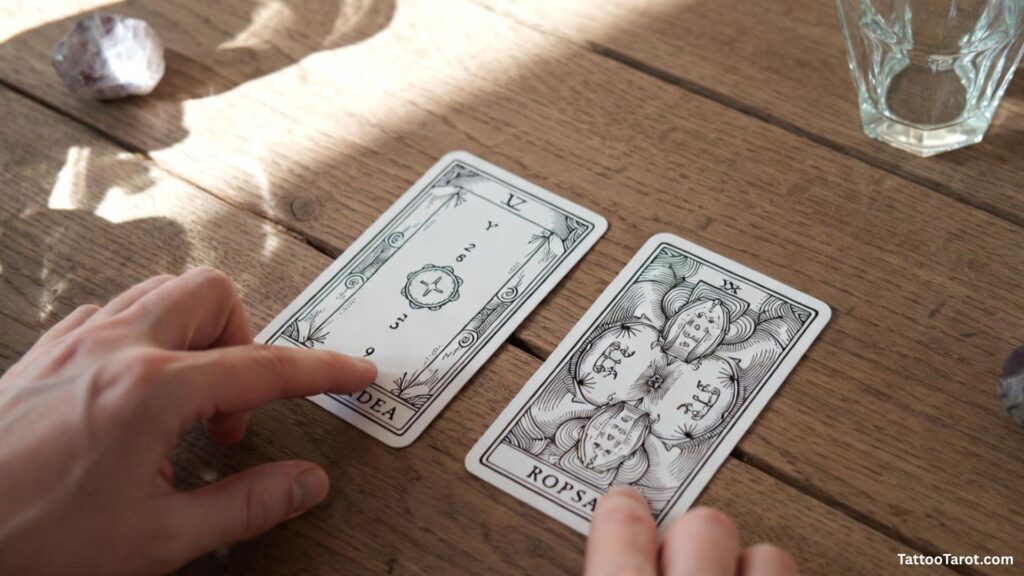
It sounds simple, but it’s incredibly telling.
What to look for
- Facing away → distance, tension, avoidance
- Facing toward → connection, engagement
Example
- Queen of Cups + Page of Wands
That Page looking away can easily read as emotional disengagement. Think: a teenager tuning out a caring parent.
Tarot art tells stories if you let it.
9. Upright and Reversed Cards
If you read reversals, combinations add another layer.
Basic idea
- Both upright → energy flowing outward, things happening
- One reversed → inner work mixed with outer events
Example
- Nine of Cups + Queen of Swords
This might be someone making thoughtful decisions to protect emotional satisfaction — especially if one card is reversed and pointing inward.
10. Flow (The “Just Trust It” Method)
Flow is less about rules and more about observation.
It’s advanced, but not because it’s complicated — because it asks you to loosen control.
How to do it
Find something shared between the cards. Then see how it changes.
Example
- Ten of Cups
- Six of Cups
Both show children. In the Ten, they’re with their parents. In the Six, they’re playing independently.
That shift alone tells a story: growing up, gaining independence, moving forward while keeping joy intact.
Conclusion
Learning how to read tarot card combinations isn’t about memorising more meanings or stacking techniques until your head hurts. It’s really about learning to slow down and notice what’s already there. The cards are doing most of the work — you’re just listening in.
Some days, combinations will make immediate sense. Other days, they won’t, and that’s normal. Tarot isn’t meant to be clean or perfect. It’s meant to be intuitive, a little fuzzy around the edges, and shaped by your own experience. The more you read, the more your brain naturally starts linking cards together without you having to think about it.
You don’t need to use every method every time. Pick one or two that feel natural. Let the cards talk. Let the meaning unfold instead of forcing it. Over time, reading combinations will stop feeling like a skill you’re trying to master and start feeling like something you just… do.
And that’s usually when tarot starts getting really interesting.
Frequently Asked Questions (FAQs)
Q. Do I need to memorise all tarot card meanings to read combinations?
Ans: No. Honestly, that’s one of the biggest myths in tarot. You just need a basic sense of each card and the ability to notice how they interact. Keywords, images, and intuition will take you a lot further than memorisation ever will.
Q. How many cards should I start with when learning combinations?
Ans: Two cards is perfect. Three at most. Once you’re comfortable reading how two cards talk to each other, adding more cards feels a lot less intimidating.
Q. What if the cards seem to contradict each other?
Ans: That usually means the situation is complicated — not that you’re doing something wrong. One card might show the desire, while the other shows the reality. Or one could represent the inner experience and the other the outer situation. Tension in combinations is often where the real message lives.
Q. Do tarot card combinations have fixed meanings?
Ans: Not really. Some pairings show up often and feel familiar, but context matters more than memorised combinations. The same two cards can mean different things depending on the question, the spread, and the person you’re reading for.
Q. Should I always read tarot cards in order?
Ans: Most of the time, yes, especially if you’re working with a spread. But it’s also okay to let your eyes move naturally. Sometimes one card clearly explains another, regardless of position.