Okay, so you want to read Tarot for someone else. Maybe it’s just for fun, maybe you’re thinking about doing it professionally, I don’t know—but either way, it can feel kind of intimidating at first. Like, you’re sitting there with all these cards, each one full of weird symbols, and you’re thinking, “Am I gonna screw this up? Will I even make sense?” Trust me, that’s super normal. Honestly, even people who’ve been reading for years sometimes get stuck and panic a little. Tarot is a skill, and if you’re learning how to do a tarot reading, it’s not something you master overnight.
But there’s a way to get a handle on it so you feel like you’re not completely lost and so your client doesn’t leave thinking, “Well… that was weird.” You can have a method, a process, and once you do enough readings, you can start adding your own flair—your intuition, your quirks, your weird little rituals. That’s what makes Tarot fun anyway.
Before we jump in, one thing: if you’re really struggling with reading for other people, getting some guidance from a pro can save you a lot of headaches. Sites like Purple Garden let you connect with experienced readers who can give tips, answer questions, or even watch you do a reading and tell you where you went off-track. Sometimes just seeing someone else do it is worth way more than reading a bunch of books or articles.
Anyway, let’s start from the beginning. Here’s how I like to break it down.
Step 1: Figure Out The Focus
So the first thing you need to do is figure out what this reading is actually about. Honestly, this can feel really stressful when you’re new. “Do I just start pulling cards? Do I ask a question? What if I pick the wrong one?” Yep. Been there.
The thing is, you need some kind of focus. Otherwise, the cards are like, “Uh… what do you want from me?” And then you’re staring at them thinking, “Well… uh… help?” Not super helpful.
Good focus questions are open-ended. Stuff like:
- “What part of life do you need guidance on right now?”
- “Is there something specific you want clarity on?”
Try to avoid questions like “Will I get married next month?” That’s yes/no territory, and Tarot isn’t really about yes/no. It’s more about energy, possibilities, influences.
Some readers are super strict: they’ll only read if there’s a very clear question. Others don’t care and just pull cards and see what comes up. As a beginner, I recommend at least getting some kind of hint about what the person wants to focus on, otherwise you’re just spinning your wheels. Think of it like trying to solve a puzzle—you need to know what the puzzle is first.
Step 2: Shuffle The Cards
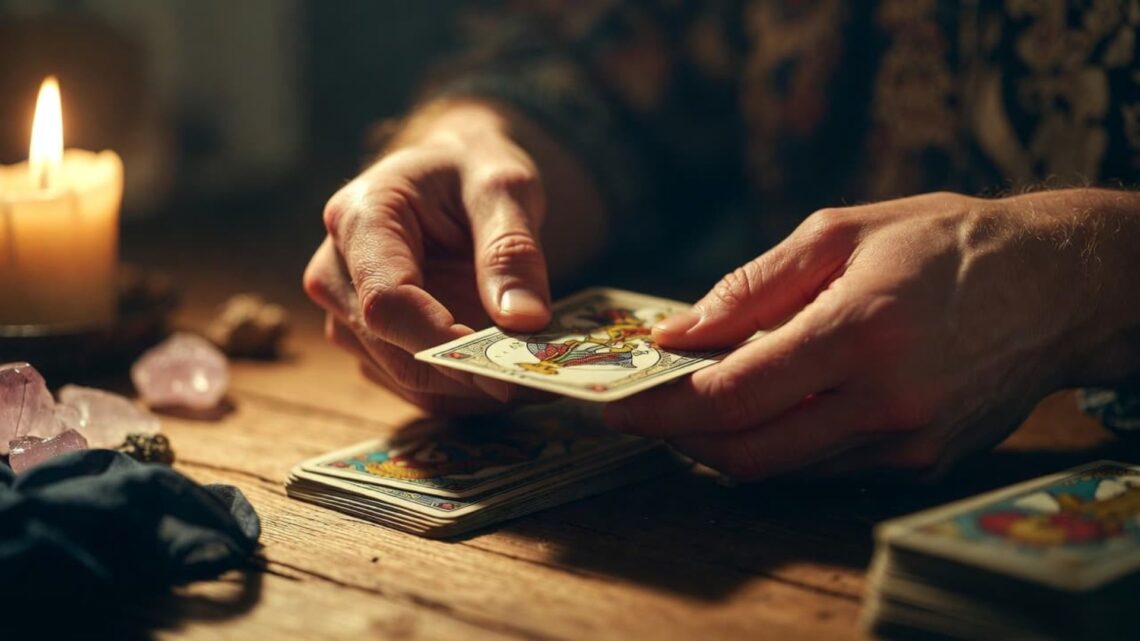
Shuffling sounds simple, right? But in Tarot, it’s kind of a big deal. It’s like… the way you shuffle the deck actually matters in terms of connecting with it. Every reader has their own style. Some like to split the deck, shuffle both halves, recombine, shuffle again. Some riffle, some cut multiple times. Some just throw them on the table and mix them around. Honestly, it doesn’t matter too much how you do it, just do it in a way that feels natural to you.

Shuffling isn’t just moving cards around. It’s supposed to “wake them up,” get the energy flowing, get you in the right headspace. Some readers even get little flashes of ideas or feelings while shuffling. If that doesn’t happen, don’t freak out. Just shuffle until it feels like it’s done. There’s no magic number of shuffles.
Basically, shuffle until it feels right in your gut. That’s the rule.
Also Read: Tarot Card Combinations and What They Mean 2026
Step 3: Ask Your Question
Now, with your focus in mind, it’s time to actually ask the cards something. This part can be weirdly tricky because it’s not just “think of a question and ask.” You want something open-ended, clear, and specific enough that the cards can talk to it.

Don’t ask yes/no stuff. Instead, ask about energy, influences, what’s going on, what’s coming. Like:
- Instead of: “Will I get that job?”
- Try: “What energy should I be aware of around my career right now?”
If you change your question mid-reading, you should reshuffle and pull fresh cards. Don’t try to bend the old spread to fit a new question—it just gets messy.
And if you freeze here and don’t know how to phrase your question? Totally normal. Ask someone more experienced to show you examples, or just write your questions down until one feels right. There’s no perfect way to do it.
Step 4: Draw The Cards
Finally, we get to the fun part—pulling cards. There are a few ways to do this:
- Letting cards jump out naturally while shuffling—some people use these as their picks.
- Draw from the top after shuffling.
- Spread them out and pick the ones you feel drawn to—like a fan of cards on the table.
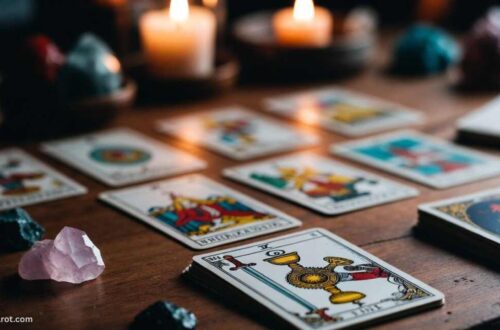
If you’re new, keep it simple. A three-card spread is perfect:
- Card 1: Past
- Card 2: Present
- Card 3: Future
It’s simple, it’s clean, it works, and it gives you enough to interpret without getting overwhelmed.
Later, when you’re comfortable, you can try bigger spreads like the Celtic Cross. But honestly, starting simple is fine and often less stressful.
Step 5: Interpret The Cards
Here’s where things get interesting… and kind of messy. You should know the basics of each card, sure. But a Tarot reading is way more than memorization. It’s intuition, energy, and the story that comes out when you look at all the cards together.
Some tips:
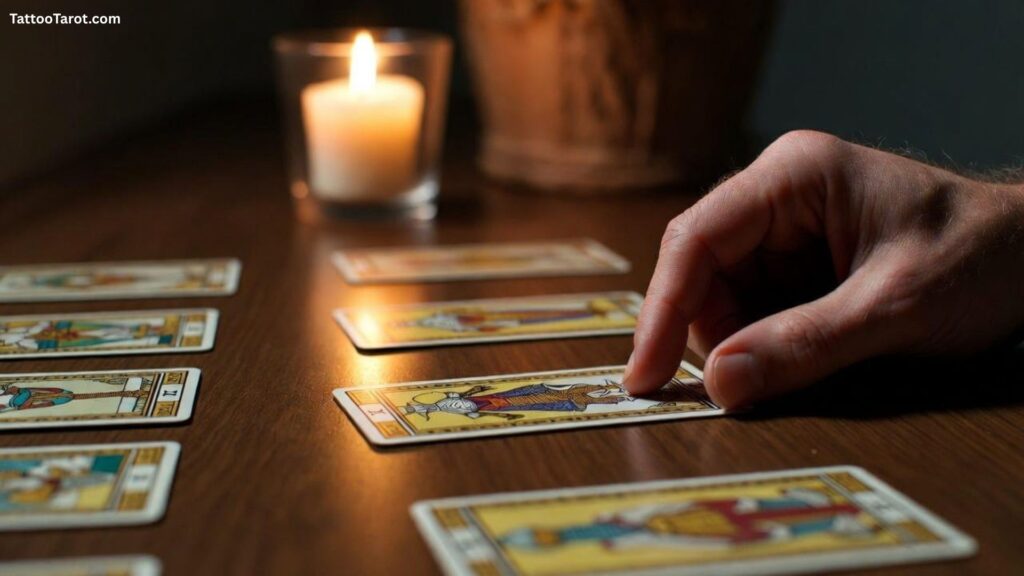
- Pay attention to sensations: Does a card make you feel tense? Happy? Confused? That’s info.
- Touch the cards that feel important: Sometimes a card will “call” to you. Notice it.
- Write stuff down: Sometimes your first thought about a card makes no sense, but later it clicks.
Also, watch for patterns. Colors, symbols, repeated numbers, multiple solo figures—these all mean things. Major Arcana cards are the big life lessons, the heavy hitters. Minor Arcana is smaller, day-to-day stuff. Wands, Cups, Pentacles, Swords—they each have their own vibe.
Don’t overthink it. Look at the story the cards are telling and let your intuition fill in the blanks. That’s really what Tarot is about anyway.
Step 6: Give Advice
After you’ve interpreted the cards, you need to translate that into something useful for your client. This doesn’t mean making predictions if you’re not comfortable—just focus on what guidance or insight they can take away.
For structured spreads like the Celtic Cross, there’s usually an “advice” card built in. Otherwise, just pull a card for guidance: “What action should my client take?”
When giving advice, mix intuition with logic. If a card says something confusing, it’s okay to say, “I’m not entirely sure about this, but here’s what I feel.” People usually appreciate honesty more than fake confidence.

Also Read: The High Priestess Tarot Card Meaning for Beginners
Step 7: Close The Session
Once you’ve said everything you need to say, it’s time to close things out. Don’t just shove the cards back in the box. Do a little ritual:
- Stack the cards neatly.
- Set an intention that the session is done.
- Optionally, put a protective crystal on the deck—selenite or obsidian work well.
- Thank the cards and the client for the messages.
Then take a few minutes for yourself. Clear your energy. Light some incense or sage if that’s your thing, meditate, or just breathe. Store your deck somewhere safe. Closing the session properly helps you reset for the next reading and keeps energy from lingering.
Final Thoughts
Reading Tarot for other people is a journey. You’re going to make mistakes, freeze up, maybe pull weird cards that don’t seem to fit—but that’s okay. Each reading teaches you something. The more you practice, the more confident and intuitive you get.
The most important thing is to stay consistent enough to feel grounded, but also flexible enough to follow your intuition. Tarot isn’t a math problem. It’s messy, human, alive, and the more you embrace that, the better your readings will be.
Frequently Asked Questions (FAQs)
Q. What do I need to start doing a Tarot reading?
Ans: To begin, you need a Tarot deck, a quiet space, and an open mind. Many beginners also keep a notebook to jot down card meanings and insights as they practice.
Q. How do I prepare before a Tarot reading?
Ans: Center yourself, clear your mind, and focus on your question or intention. Some readers like to shuffle the cards while concentrating on the person or situation they are reading for.
Q. Do I need to memorize all the Tarot card meanings?
Ans: Not necessarily. Beginners can start with a basic understanding of major and minor arcana meanings, then rely on intuition. Over time, personal associations with cards make readings more accurate.
Q. How do I interpret Tarot cards for someone else?
Ans: Start with simple spreads, like the three-card spread (past, present, future). Look at the symbolism, the position of each card, and your intuitive feelings to build a narrative for the reading.
Q. Can anyone learn how to do a Tarot reading?
Ans: Yes! Tarot is a skill that improves with practice. Even experienced readers continue learning and developing their intuition over time.