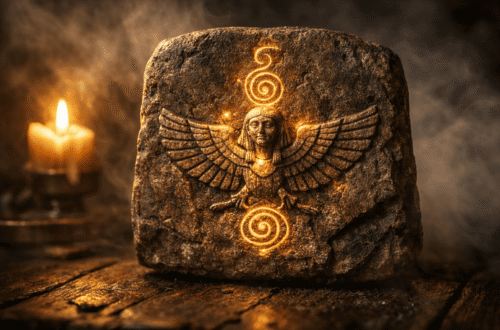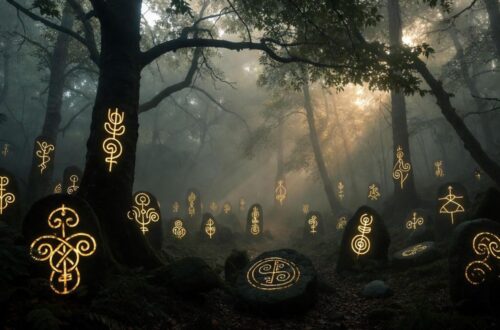
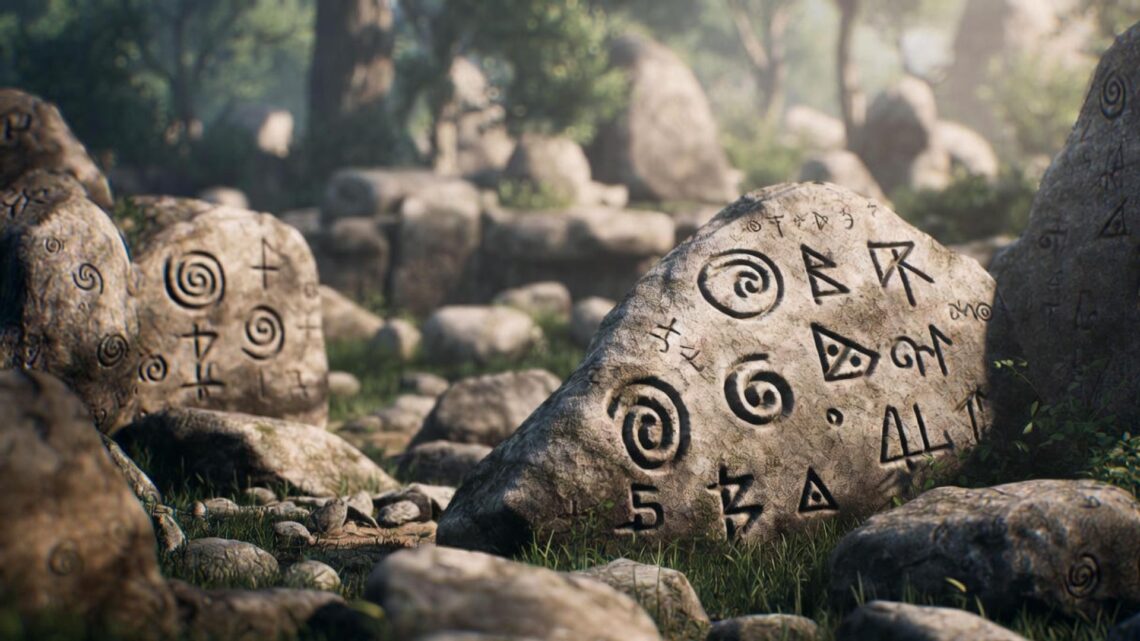
So, humans have been making marks on stuff forever. Like, way back, people weren’t just drawing because they were bored—they were trying to communicate, to leave something behind, maybe even to make sense of the world around them. You see these scratches in caves, petroglyphs on rocks, and just… random carvings. Some of it’s clearly practical, like counting seasons or marking a hunting ground, but some of it feels like they were reaching for something bigger—like life, death, the universe, gods, whatever.
Anyway, in this piece, we’re gonna dive into some of the coolest, most powerful ancient symbols and their meanings. We’ll go from shapes humans drew tens of thousands of years ago to symbols from Celtic, Norse, and Egyptian culture, and I’ll pull in some thoughts from John Paul Gomez, who knows a ton about these symbols.
Common Ancient Symbols
According to Gomez, some of the “big” symbols in ancient history include things like the phoenix, ouroboros, ankh, labrys, and the scarab beetle. Those are the flashy ones, but humans also loved the simple stuff. Like really simple:
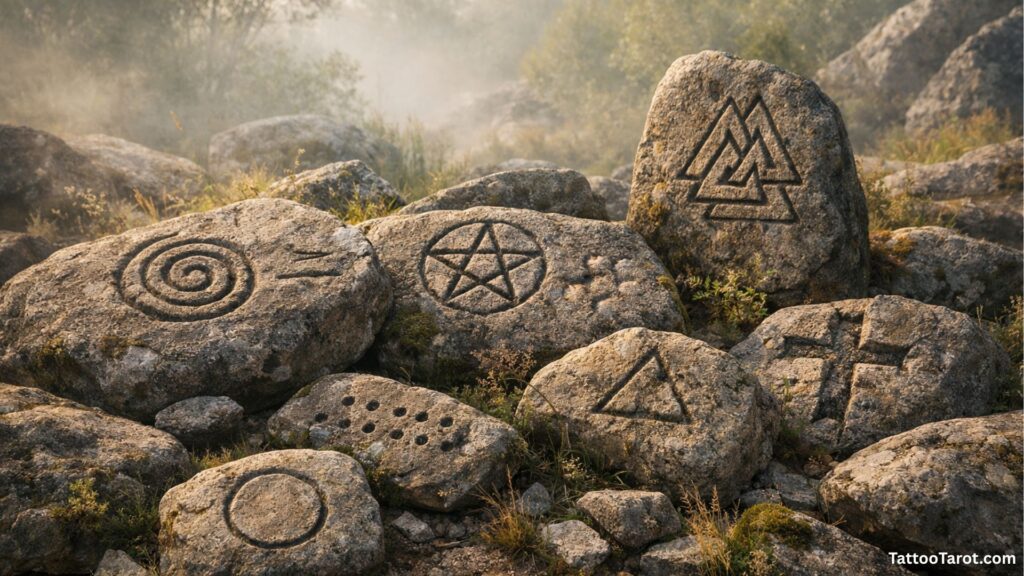
- Dots
- Circles
- Spirals
- Triskelion
- Shamrock
- Valknut
- Thunderbolt
- Yin Yang
I know, some of those sound random, but even the simplest shapes carried meaning. Circles, dots, triangles—they weren’t just doodles. People were putting ideas into these marks, sometimes spiritual, sometimes practical, sometimes both.
Ancient Symbols and Shapes
Circle
Circles. They’re everywhere. One of the oldest symbols humans ever made. No one’s 100% sure what they meant, but the guesses are things like existence, community, maybe holding something together. There’s also this spiritual idea—the circle as a symbol of unity, wholeness, eternity… it’s natural humans would notice it everywhere, like the sun, the moon, a wheel, a bowl.
Dates back to: At least 23,000 BC
Dots
Dots might look silly to us, but they’re huge historically. They appear in cave paintings that are, like, 21,000 years old. People think they might have been counting something—animals, days, seasons. Or maybe it was symbolic, like marking something important. Hard to know. But dots were one of the earliest ways humans abstracted reality into symbols.
Dates back to: At least 21,000 BC
Spiral
Spirals are mesmerizing. Oldest known spiral is a petroglyph in Ireland. People think it’s about spiritual growth, cycles, interconnectedness—basically the universe doing its thing. I mean, spirals are everywhere in nature: shells, galaxies, plants. Humans probably saw that pattern and said, “Yeah… this means something bigger.”
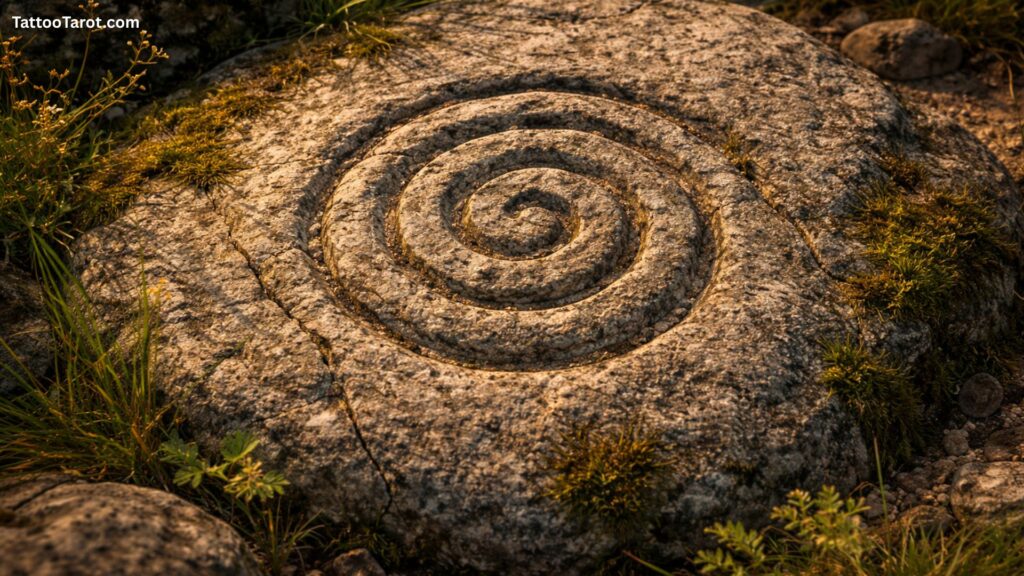
Dates back to: 4000–2000 BC
Lines
Lines are… lines. But in ancient art, horizontal lines often represented the horizon, vertical lines connected earth and sky, and clusters of lines might have been tally marks. Some crisscrossing lines in South Africa could be over 330,000 years old, and we still have no clue what they meant. But they’re there, scratched in stone. That’s kind of amazing.
Dates back to: 333,000–239,000 BC
Cross or X
The cross and the X show up a ton. Sometimes it’s practical, like a crossroads or marking a spot, sometimes spiritual, maybe protection or sun rays. Eventually, of course, it became a Christian symbol. In America, Gomez notes it’s tied to moral guidance and sacrifice, even outside churches. Crosses appear on memorials, cultural stuff, all over.
Dates back to: 333,000–239,000 BC
Triangle
Triangles are all over prehistoric art. Could have been arrowheads or spears, could have been mountains, could have been lightning, could have been… who knows. Egyptians eventually made it divine, Christianity made it the Trinity. Humans saw the shape and attached meaning, probably different for everyone.
Dates back to: 40,000 BC
Square Or Rectangle
Squares and rectangles show up in Native American rock paintings. Usually marking a place, a boundary, or a space. Weirdly, they’re also in South African engravings from like 330,000 years ago. Humans just like organizing space with shapes, apparently.
Dates back to: 330,000 BC
Also Read:
Pentagram
The five-pointed star has a long, twisty history. In Greek culture, it was about health, harmony, human proportion. Each point mirrored a part of the body. Later, in Christianity, it got linked to the five wounds of Christ. In ancient Egypt and Mesopotamia, it marked tombs. People probably also thought it would ward off evil. Now, of course, some think “occult,” but originally, it might’ve been protective.
Dates back to: 6000–3100 BC
Octothorpe (Hashtag)
Yes, a hashtag. Sort of. Two vertical lines crossed by two horizontal lines. Found in the oldest drawings we know, around 71,000 years old. No clue what it meant—maybe spiritual, maybe ownership. But humans loved intersecting lines. Also, funny how something that old is literally on our keyboards now.
People
Cave paintings of humans? Yeah, obvious. One early one in Indonesia shows three humans around a pig—the earliest known storytelling through art. Humans weren’t just drawing—they were telling stories.
Dates back to: 49,000 BC
Animals
Animals were huge for early humans. Food, clothing, tools, everything. Early petroglyphs probably often just represented real animals, like birds or deer, but some might have had spiritual significance. They were also used to track herds or record hunts. Common animals: horses, bison, elk, deer, moose, boars, bears, wolves, ravens.
Dates back to: 49,000 BC
Celtic Symbols
Celtic art is just… wow. Lots of flowy, twisting designs. Their symbols often deal with nature, life cycles, and spirituality, and many were adopted later by other cultures.
Triskelion
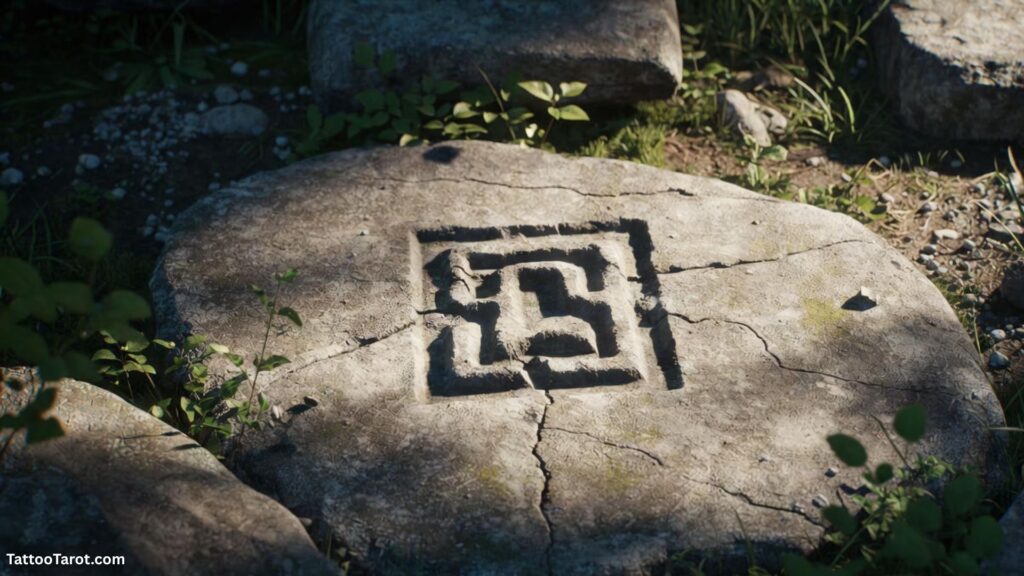
Three connected spirals. Older than the Celts, but they made it theirs. Represents heavens, earth, spiritual world, and cycles of life and death. Feels alive, moving, eternal.
Dates back to: 3200 BC
Triquetra
Three overlapping triangles. Represents earth, sea, sky. Also life, death, rebirth. Christians later used it for the Trinity.
Dates back to: 400 BC
Tree Of Life
Celtics loved the Tree of Life. Balance, resilience, wisdom, cycles of life. Egyptians also had it, as destiny and knowledge. Trees just scream life, right?
Dates back to: Turkey, 7000 BC
Shamrock
Three-leaf clover. Sacred to the Celts, later used by St. Patrick to explain the Trinity. Symbolism stuck.
Dates back to: 100 BC
Norse Symbols
Norse symbols are badass. Power, protection, gods, warriors, all that.
Valknut
Three triangles interlocked. Found at burial sites. Symbolizes Odin, courage, life-death cycles, warrior bonds. Interlocking triangles make you think of life moving into death.
Dates back to: 600 CE
Also Read: Symbols Of Protection from Evil – 2026
Yggdrasil – Tree of Life
Like Celtic Tree of Life, but bigger, more cosmic. Connects gods, humans, spirits. Growth, wisdom, the universe itself.
Dates back to: 1300 CE
Mjölnir – Thor’s Hammer
Thor’s hammer = protection, courage, divine strength. Worn as amulet. Wards off bad stuff. Humans love a good symbol they can wear.
Dates back to: 800 CE
Conclusion
Ancient symbols weren’t just art—they were a way for humans to communicate, make sense of life, and connect with the world around them. From spirals and circles to Thor’s hammer and the Tree of Life, every symbol tells a story about human thought, belief, and creativity. Even today, we’re still using symbols to express ideas, proving their power is timeless.
Frequently Asked Questions (FAQs)
Q. What are ancient symbols?
Ans: Ancient symbols are shapes, drawings, or icons created by early humans or ancient cultures to communicate ideas, mark events, represent spiritual beliefs, or convey meaning. They range from simple dots and lines to complex designs like the Tree of Life or Thor’s hammer.
Q. Why did ancient humans use symbols?
Ans: Humans used symbols to explain the world, record events, track seasons or animals, and express spiritual beliefs. Symbols were a way to communicate across time and space, long before written language existed.
Q. What are some common ancient symbols?
Ans: Some of the most common ancient symbols include circles, spirals, triangles, crosses, dots, pentagrams, and culturally significant symbols like the Triskelion (Celtic), Valknut (Norse), or Ankh (Egyptian).
Q. What does the spiral symbol mean?
Ans: The spiral often represents growth, cycles, and interconnectedness. It shows up in nature (like shells or galaxies) and ancient art, symbolizing spiritual or life cycles.
Q. What is the meaning of the Tree of Life?
Ans: The Tree of Life appears in many cultures. For the Celts, it meant balance, wisdom, and life cycles. In Norse mythology, Yggdrasil connects gods, humans, and spirits, symbolizing the structure of the universe.